

 EN
 English
 Deutsch
 中文简体
Author: Admin Date: 2026-10-28
Electric Wall Heater with Fan: Applications, Selection Criteria, and Practical Guidance
A cold bathroom, a drafty home office, or a hotel corridor often has the same problem: the wall is available, but the heat is slow, uneven, or expensive to install. An electric wall heater with fan solves that by combining a compact wall-mounted body with a PTC ceramic element and forced airflow. The conclusion is simple: choose the heater by circuit capacity, room load, fan noise, safety certification, and serviceability, not by wattage alone.
For buyers sourcing for retail or projects, the difference between a good unit and a return-prone unit usually sits in details that are easy to specify up front. This guide covers those details, from wattage planning and airflow comfort to installation checks and OEM verification.
Content
- 1 What an Electric Wall Heater with Fan Does Differently
- 2 Wattage, Circuits, and Room Load
- 3 Airflow, Noise, and Daily Comfort
- 4 Safety, Installation, and Maintenance Checks
- 5 OEM Sourcing: What to Verify Before a Bulk Order
- 6 FAQs for Electric Wall Heater with Fan Buyers
- 6.1 What is an electric wall heater with fan?
- 6.2 How many watts do I need for a wall mounted space heater?
- 6.3 Is a PTC ceramic wall heater safe in a bathroom?
- 6.4 Can a fan-assisted wall heater run all night?
- 6.5 Are electric wall heaters with fan energy efficient?
- 6.6 What should OEM buyers check before ordering wall-mounted heaters?
What an Electric Wall Heater with Fan Does Differently
A conventional wall convector relies on natural convection. Air rises across the element, drifts into the room, and often stratifies near the ceiling before the occupied zone feels warm. A fan-assisted model changes that pattern. The fan pulls room air through the inlet grille, pushes it across a heated PTC ceramic element, and delivers it forward at a controlled speed.
PTC means positive temperature coefficient. As the ceramic element heats, its resistance rises, which helps limit current and surface temperature under normal operating conditions. The fan then does two jobs: it improves heat distribution and it reduces the delay between switching on and feeling warmth. That is why a 1500 W fan-assisted wall heater can feel more responsive than a larger natural-convection panel in a small room.
The fan is not just a speed feature. It affects noise, dust movement, thermostat cycling, and the minimum clearance around the unit. Ask for the airflow path and fan curve, not only the rated watts.
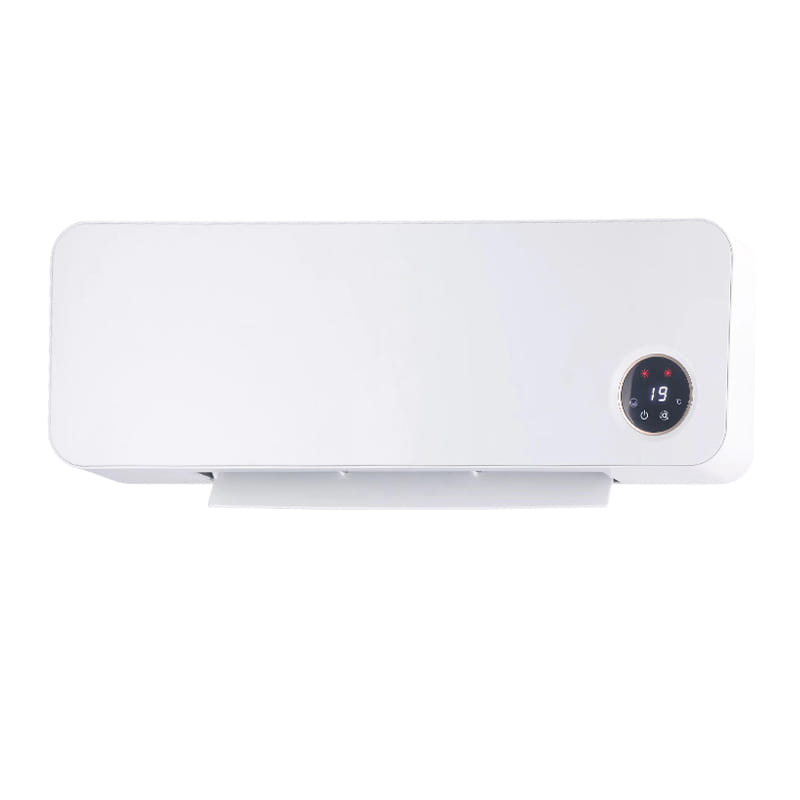
Figure 1. A fan-assisted wall heater combines a PTC element, fan, grille, thermostat, and safety cut-out in a fixed wall-mounted body.
The manufacturer’s wall-mounted ceramic fan heater range shows this architecture across several series, with model suffixes that usually indicate control, display, or installation variants. Ask for the suffix key before you print a catalog, because a suffix that is clear to the factory may mean nothing to a distributor’s sales team.
Wattage, Circuits, and Room Load
Start with the circuit, not the catalog cover. A 1500 W heater on 120 V draws 12.5 A; on a 15 A branch it leaves little headroom for other loads. A 2000 W model draws 16.7 A and normally needs a 20 A circuit. A 3000 W unit usually belongs on 240 V, where it draws 12.5 A. These are nameplate calculations; local code and plug or wiring requirements decide the final installation.
According to the U.S. Department of Energy, space heating and cooling together account for roughly half of a typical U.S. home's energy use. That makes thermostat strategy and air distribution as important as raw wattage. A fan-assisted wall heater can feel effective at a lower setpoint because it mixes air, but it cannot overcome a leaking wall or an undersized circuit.
Figure 2. Catalog wattage span for PTC fan heaters. Wall-mounted options depend on model, voltage, and market.
| Rated output | Typical supply | Current draw | Best-fit check |
|---|---|---|---|
| 600 W | 120 V | 5.0 A | Small personal spaces, mild climates, or supplemental heat |
| 1500 W | 120 V | 12.5 A | Bathrooms, offices, and small rooms with a dedicated 15 A or 20 A circuit |
| 2000 W | 120 V | 16.7 A | Larger rooms where a 20 A circuit and fixed wiring are available |
| 3000 W | 240 V | 12.5 A | Open areas and colder climates where 240 V supply is standard |
Use the table as a first filter. Then match room volume, insulation, glazing, and climate. A 1500 W unit may suit a small, well-insulated bathroom or office; a 2000-3000 W unit may be needed for a larger open area, but only where the circuit and mounting height are correct. For B2B buyers, request a sizing sheet that states its assumptions instead of a single “covers X square meters” claim.
Airflow, Noise, and Daily Comfort
The fan curve matters more than the fan diameter on a spec sheet. A high-speed fan can move warm air across a room, but it can also create a narrow, noisy jet. A wider grille and a lower-speed setting usually feel gentler in bedrooms and offices. Ask suppliers for sound pressure at 1 m on low and high speed, not just a generic “quiet” claim. If the value is not available, request a sample and test it in a quiet room.
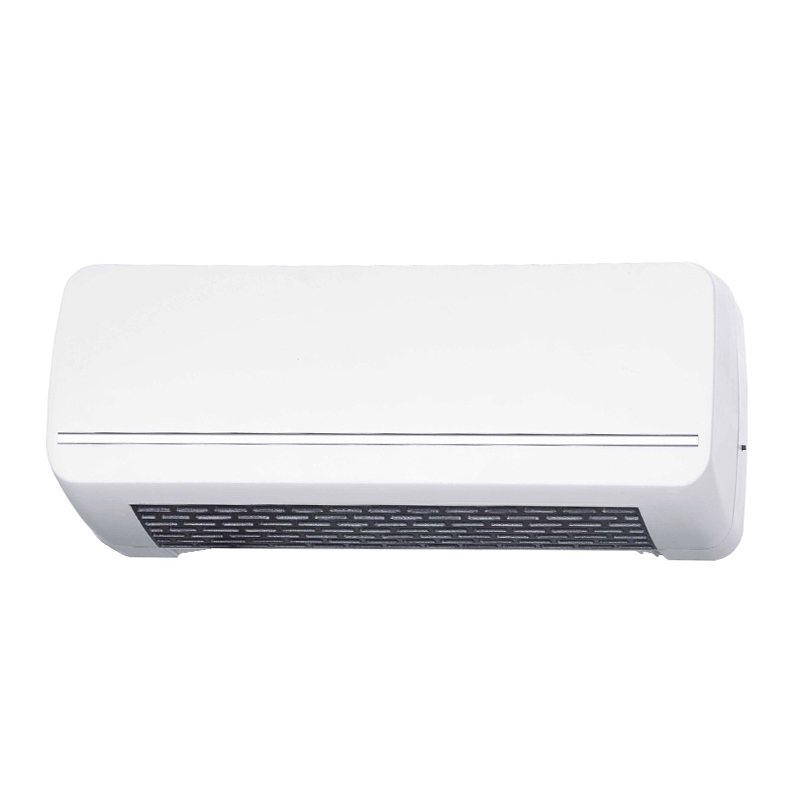 Double-Speed Intelligent Temperature Control Wall-Mounted Ceramic Heater2000W wall-mounted PTC ceramic heater with electronic thermostat, 1000W/2000W settings, 8-hour timer, LED display, and overheat protection for controlled room heating.View Product →
Thermostat behavior is the second comfort factor. Mechanical thermostats are simple and cost-effective; digital thermostats hold a setpoint more closely and can add timers or display feedback. For a rental apartment or hotel, a lockable control and predictable auto-restart behavior after power interruption can matter more than an extra degree of precision. For a home office, a low-speed fan plus a precise thermostat is usually the better combination.
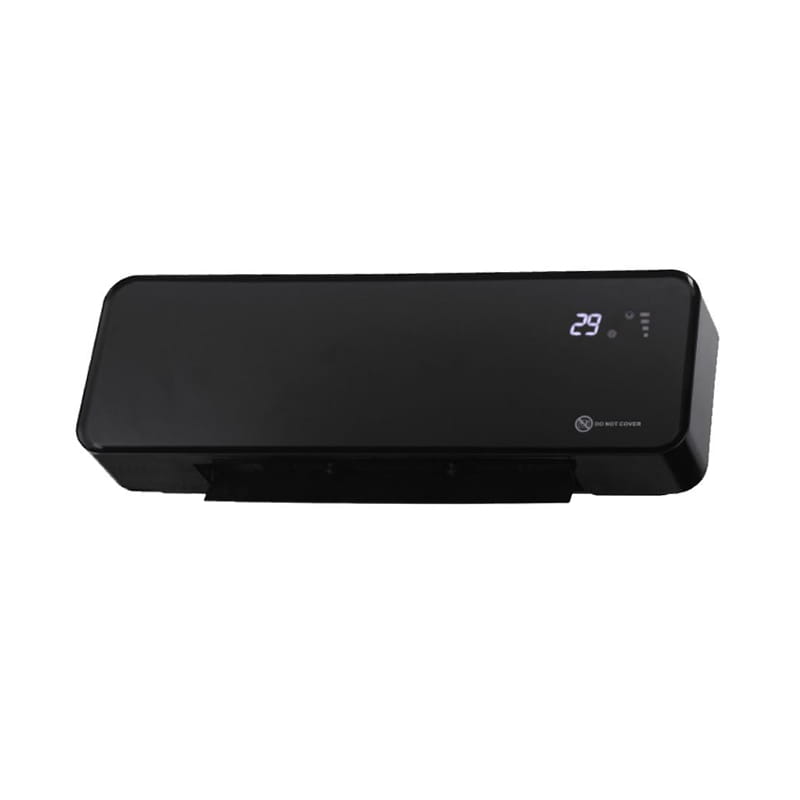 Double-Speed Temperature-Controlled Wall-Mounted Fan Electric Heater2000W wall-mounted PTC fan heater with electronic thermostat, two heat settings, 8-hour timer, LED display, and thermal cut-out for fixed indoor heating.View Product →
- Check whether the fan continues briefly after shutdown to purge residual heat.
- Confirm the grille can be removed or opened for cleaning without exposing live parts.
- Ask for the minimum wall clearance above and below the unit, not only side clearance.
- Review the thermostat differential and whether the fan runs continuously or cycles with the element.
Safety, Installation, and Maintenance Checks
Wall-mounted heaters are fixed appliances, so the installation review starts before the product arrives. Confirm the wall substrate can carry the bracket and that the cable route is protected. In bathrooms, the IP rating and zone rules matter; a unit marketed for bathroom use should have the correct IP rating and instructions for the specific zone. In North America, UL 1278 is a common reference for movable and wall-mounted electric room heaters. In Europe, CE marking is required, while GS is a voluntary German safety mark that buyers often request for retail.
For a closer look at clearance and use precautions, see this guide to wall-mounted ceramic fan heater safety precautions.
- Verify the thermal cut-out and overheat protection are independent of the normal thermostat.
- Check that the fan motor and element are protected by a suitable enclosure and that the grille cannot be removed without a tool.
- Confirm the supplied bracket, screws, and template match the wall type; masonry, drywall, and panel walls need different fasteners.
- Ask for a wiring diagram and a spare-parts list for thermostats, fan motors, and control boards.
- Set a cleaning interval based on dust load; a blocked inlet reduces airflow and can shorten element life.
Maintenance is simple but not optional. Dust on the inlet grille and fan blades increases noise and reduces heat transfer. A vacuum with a soft brush, done after the unit is isolated from power, is usually enough. Do not spray cleaning liquid into the heater. For commercial orders, include a printed maintenance card in the box and a link to the manual; it reduces support calls and keeps the end user from opening the case.
OEM Sourcing: What to Verify Before a Bulk Order
Ningbo Shuaige Electric Appliance Co., Ltd. states that it is a PTC fan heater manufacturer in Ningbo, China, with a 20,000 square meter factory, more than 15 years of industry experience, and OEM/ODM service for overseas brands. The company also states that it holds CE, GS, LFGB, ISO 9001, and ISO 14001 certifications and that it is close to Ningbo and Shanghai ports. Treat these as supplier statements and verify each certificate, scope, and model coverage against your order.
Commercial terms are part of the product. The company's published FAQ states that samples are priced at 1.5 times the quotation, with freight paid by the customer and the sample fee credited after a formal order. It also states that lead time is usually 30-60 working days and that detailed wholesale inquiries receive a quote within 24 hours. Those terms are workable for many programs, but they need to be written into the purchase order with inspection criteria, packaging tests, and a change-control clause.
For a wall heater with fan, ask for the following before tooling or a repeat order:
- Certificate and test report for the exact model, voltage, plug, and market.
- Airflow and noise data at low and high fan speed, with the test method stated.
- Surface-temperature test points and the thermal cut-out trip temperature.
- Packing drop-test standard and carton mark approval process.
- Golden-sample approval, first-article inspection, and batch traceability.
If the order is for a private label, confirm who owns the tooling, the silkscreen, and the control firmware. A clear OEM/ODM boundary prevents delays when the second production run starts.
FAQs for Electric Wall Heater with Fan Buyers
What is an electric wall heater with fan?
It is a wall-mounted room heater that uses a PTC ceramic element and a fan to push warm air into the room. It saves floor space and usually heats faster than a natural-convection panel of similar output.
How many watts do I need for a wall mounted space heater?
For small rooms, 600-1500 W is common; larger or colder rooms often use 2000-3000 W. Match watts to the circuit, room heat loss, and local code rather than using a single room-size rule.
Is a PTC ceramic wall heater safe in a bathroom?
Only if the model is rated for the bathroom zone and has the correct IP rating and installation instructions. Keep the unit away from water spray and follow the zone diagram in the manual.
Can a fan-assisted wall heater run all night?
Many models can, but check the manufacturer's instructions, thermostat behavior, and safety cut-outs. For bedrooms, use a lower setpoint and confirm the fan noise level on low speed.
Are electric wall heaters with fan energy efficient?
They convert electricity to heat at close to 100% efficiency, but running cost depends on insulation, thermostat control, and tariff. A fan improves comfort and heat distribution; it does not cancel heat loss through windows or walls.
What should OEM buyers check before ordering wall-mounted heaters?
Verify the exact-model certificate, airflow and noise data, thermal cut-out settings, packing tests, lead time, and spare-parts plan. Also confirm who owns tooling and firmware for private-label production.

-
Feedback
Related products



Copyright© Ningbo Shuaige Electric Appliance Co., Ltd. All Rights Reserved
