

 EN
 English
 Deutsch
 中文简体
Author: Admin Date: 2026-11-04
Wall Mounted Ceramic Heater for Bathroom: IP Rating, Zones & Sizing Guide
It is 6:40 on a January morning. The bathroom window is fogged, the floor tiles are cold enough to make you hop from the bath mat to the sink, and the only heat source in the room is a towel rail that warms towels and very little else. This is the exact situation where a wall mounted ceramic heater for bathroom use earns its place: the unit sits above the splash line, warms the air in well under a minute, and keeps every cable off the wet floor.
The short version: a wall mounted PTC ceramic heater is a sound choice for a bathroom, because it heats fast, takes no floor space and removes the trip hazard of a portable unit. It is only a safe choice when three conditions are met: the housing is rated at least IPX4 and Class II, the unit sits outside the protected zones around the bath or shower, and the wattage matches the room. Get those three right and everything else is detail. Get any one of them wrong and no amount of build quality will save the installation.
Content
- 1 Three checks that matter more than the price tag
- 2 How much heat a small bathroom actually needs
- 3 Why a PTC ceramic element suits a damp, cramped room
- 4 What to read on the spec sheet before you order
- 5 Mounting position: the detail most installs get wrong
- 6 Running cost: what it adds to the electricity bill
- 7 Sourcing notes for brands, wholesalers and contractors
- 8 Frequently asked questions about bathroom wall heaters
- 8.1 Q1. Can you put a wall mounted ceramic heater in a bathroom?
- 8.2 Q2. What IP rating does a bathroom heater need?
- 8.3 Q3. What wattage do I need for a bathroom?
- 8.4 Q4. Can I leave a wall mounted bathroom heater on overnight?
- 8.5 Q5. Where should a bathroom wall heater be mounted?
- 8.6 Q6. Does a ceramic bathroom heater use a lot of electricity?
Three checks that matter more than the price tag
1. IP rating
The IP code in IEC 60529 describes what water the housing survives. IPX2 handles dripping water on an enclosure tilted 15 degrees; IPX4 handles splashing from any direction. For a fixed heater within reach of a bath or shower, European practice expects IPX4. A listing that only says IP20 belongs in a bedroom, not a bathroom.
2. Installation zone
IEC 60364-7-701, mirrored in BS 7671 Section 701, divides a bathroom into zones. Zone 1 is the space within 0.6 m of the bath or shower tray, up to 2.25 m high; Zone 2 adds a further 0.6 m band. Fixed heaters belong in Zone 2 or outside the zones entirely — never directly above the bath, never inside a shower enclosure.
3. Wiring and insulation
A bathroom heater should sit on a 30 mA RCD-protected circuit, and anything in Zone 2 needs double insulation (Class II). In the UK that usually means a fused spur with a pull-cord isolator outside the room; in North America it means a dedicated GFCI circuit with listed equipment. Hardwired beats plugged in, because there is no cord to splash or trip over.
| IP code | Water exposure | Where it fits |
|---|---|---|
| IPX0 | No water protection | Dry rooms only — bedroom, hallway, study |
| IPX2 | Dripping water, enclosure tilted 15° | Damp corners well outside splash reach |
| IPX4 | Splashing water from any direction | Zone 2 — normal domestic bathrooms |
| IPX5 | Water jets from a nozzle | Commercial or wash-down environments |
Local rules differ, and inspectors read them literally. Treat the table and the zone diagram as a starting point for a conversation with a licensed electrician, not as a substitute for one.
How much heat a small bathroom actually needs
Output is where most buyers overshoot. The long-standing rule of thumb in the heating trade is roughly 10 W per square foot, or about 100 W per square metre, for a normally insulated room. Bathrooms usually need a little headroom on top: floor-to-ceiling tile, an exterior wall and an extractor fan pulling warmed air out of the room all raise heat loss, so add 20 to 30 percent.
In practice a 4 to 6 m² bathroom lands at 750 to 1200 W, and a room of 6 to 9 m² sits comfortably at 1500 W. Oversizing is a real mistake: a 2000 W unit in a three-square-metre room hits the setpoint in two minutes, then cycles on and off, and the alternating blast of air feels colder than a steady lower output. If the wall heater will be the only heat source in a poorly insulated bathroom, size at the top of the range and insist on a proper thermostat rather than a simple two-stage switch.
Why a PTC ceramic element suits a damp, cramped room
PTC stands for positive temperature coefficient, and it is a description of the material rather than a marketing label: the ceramic element's electrical resistance climbs sharply as it heats. Two consequences matter in a bathroom.
- It self-limits. As the element approaches its designed temperature, current draw falls away, so it cannot run away the way a bare resistance wire can. There is no glowing coil and no open flame, which is exactly what you want in a room where towels and shower curtains hang within arm's reach.
- It warms up fast. The element reaches operating temperature in seconds and the fan pushes that heat into the room within a minute or two. That is the reason a ceramic fan heater beats an oil-filled radiator in a 4 m² room you occupy for ten minutes at a time.
One honest caveat: PTC output depends on intake air temperature. In a genuinely cold bathroom in midwinter, delivered heat sits slightly below the nameplate figure — another argument for choosing the upper end of the wattage range rather than the middle.
What to read on the spec sheet before you order
Six lines on a datasheet tell you more than any product photo. Ask for them in writing:
- IP rating stated against IEC 60529 — a number, not the phrase "splash proof".
- Insulation class: Class II for anything installed in Zone 2.
- Protection: overheat cut-out and a thermal fuse, not one or the other.
- Controls: a mechanical switch under an IP-rated cover, or a wall panel or remote kept outside the wet area.
- Housing: cool-touch ABS or painted steel with a sealed cable-entry gland.
- Maintenance: a removable inlet filter — bathrooms are lint-heavy, and a clogged filter is the most common reason a heater starts cutting out.
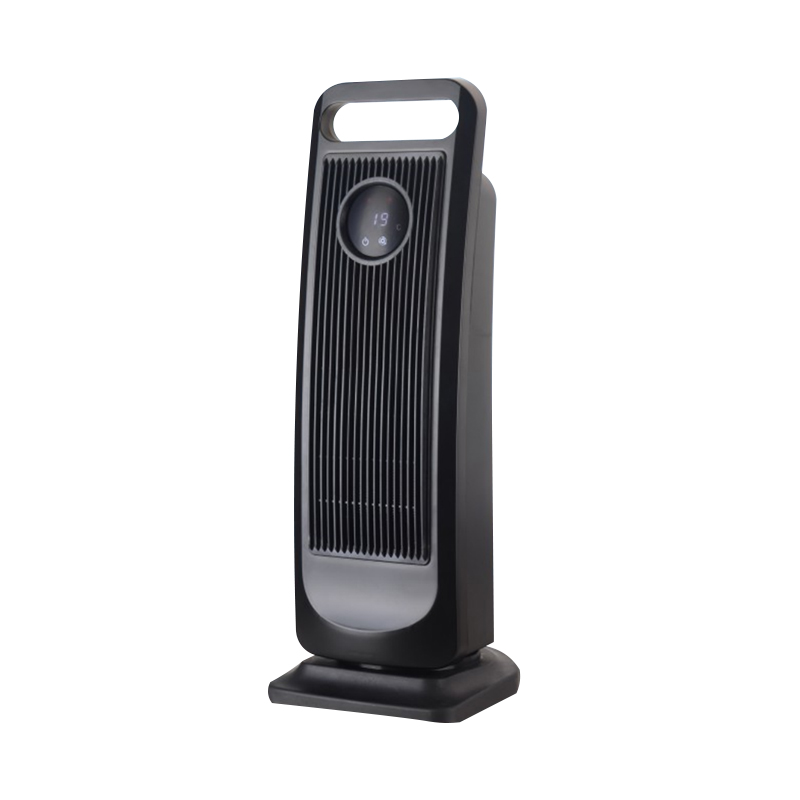
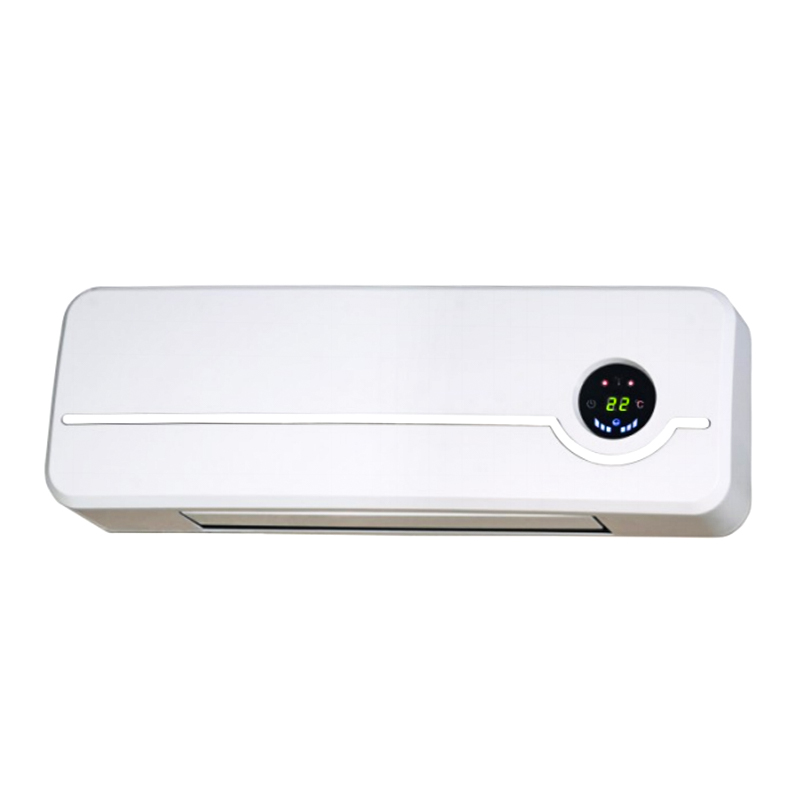 PTC-3015L Intelligent Wall-Mounted Ceramic Fan HeaterPart of the wall-mounted range, this 2000W PTC heater offers wall or tabletop use, timer, remote control and optional WiFi.View Product →
The wall-mounted side of our range was built around those six points, from the PTC3006 series through to the PTC3028 models, with the R, L and LE versions covering the different control and enclosure options buyers ask for most often.
Mounting position: the detail most installs get wrong
- Mount on an internal wall rather than an exterior one; a cold wall behind the unit wastes part of the output and encourages condensation inside the housing.
- Most installers place the unit roughly 1.8 to 2.0 m above floor level, angled so the air sweeps across the room. This is a comfort preference, not a legal requirement — the zone rule is the one that governs safety.
- Never directly above the bath, inside a shower enclosure, or on the wall behind a door that opens inward.
- Seal the cable entry gland after chasing the tiles, and fix into masonry with proper plugs; a heater working loose from hollow tile is a genuine hazard.
Our own technicians wrote a step-by-step guide covering the fixing heights, tile drilling and cable routing that come up most often on site.
Running cost: what it adds to the electricity bill
A heater's wattage is also its running cost, and the arithmetic is simple enough to do at the kitchen table: kilowatts multiplied by hours multiplied by your tariff. At a household tariff of €0.30 per kWh — substitute your own contract figure — the hourly cost looks like this.
The realistic number: a 1500 W heater used for 30 minutes a day draws 0.75 kWh, about €0.23 a day, or roughly €7 a month through a winter. That is a small fraction of heating a whole flat for the same half hour, and it is the reason so many households now heat the bathroom only, when they heat it at all.
Sourcing notes for brands, wholesalers and contractors
Buyers ordering for rental apartments or an own-brand range ask different questions: certification paperwork, batch-to-batch consistency, and lead time. Four items belong in every request for quotation.
- A test report to IEC 60529 for the actual IP rating — not a self-declared label on the box.
- CE or GS certificates carrying the model number that is being shipped.
- A Class II declaration and the bill of materials for the heating element.
- Confirmation that the thermostat and thermal fuse come from a named supplier and can be replaced in service.
Ningbo Shuaige Electric Appliance has manufactured PTC fan heaters in Ningbo for more than 15 years, with a 20 000 m² factory supplying OEM and ODM customers. Samples are charged at 1.5 times the unit price and refunded against the order, quotations usually follow within 24 hours of a detailed enquiry, and production lead time runs 30 to 60 working days, shipped through Ningbo or Shanghai.
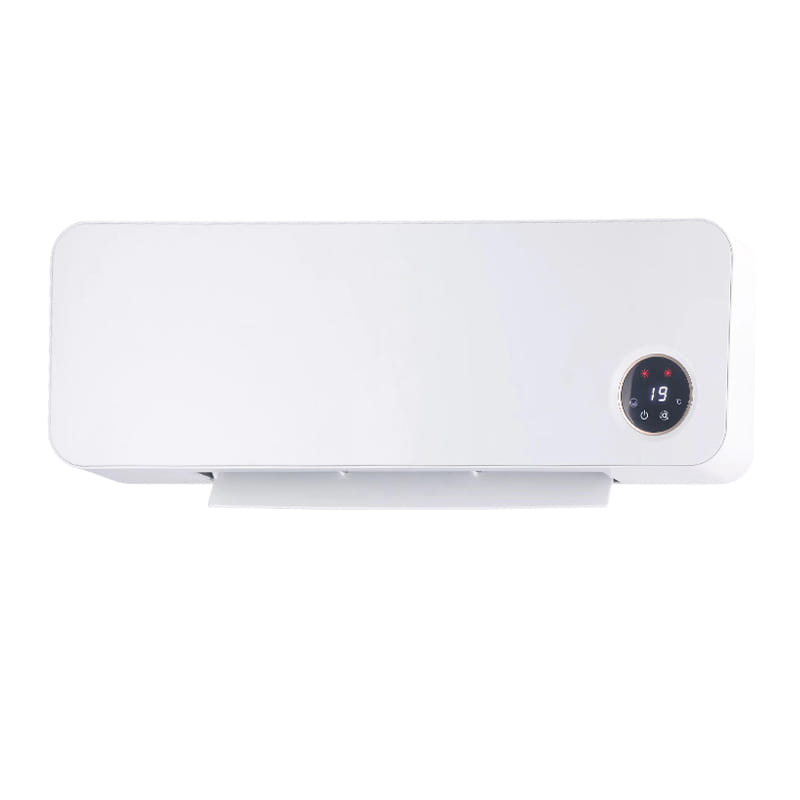 Wall-Mounted Ceramic Fan Heater RangeCompare wall-mounted and dual-purpose PTC heater models, with intelligent control, remote control and timer options across the range.View Product →
Frequently asked questions about bathroom wall heaters
Q1. Can you put a wall mounted ceramic heater in a bathroom?
Yes, provided the unit is at least IPX4, double insulated and installed outside the splash zones around the bath or shower. A dry-room heater with no water rating should never be fitted in a bathroom.
Q2. What IP rating does a bathroom heater need?
IPX4 for anything inside the splash zone. IPX2 is acceptable only in a dry position well away from the bath. Higher ratings such as IPX5 exist but are rarely necessary at home.
Q3. What wattage do I need for a bathroom?
Roughly 100 W per square metre, plus 20 to 30 percent for tiled walls and exterior exposure. A 4 to 6 m² bathroom usually runs well on 750 to 1200 W; a cold or larger room may need 1500 W.
Q4. Can I leave a wall mounted bathroom heater on overnight?
Units with a thermostat and overheat cut-out are designed to run unattended, but a timer set for 30 to 60 minutes before you use the room is the better habit for both safety and the bill.
Q5. Where should a bathroom wall heater be mounted?
On an internal wall outside the splash zone, high enough that warm air sweeps across the room, clear of shower spray, and never directly above the bath or behind an inward-opening door.
Q6. Does a ceramic bathroom heater use a lot of electricity?
A 1500 W model draws 1.5 kWh per hour at full output, about €0.45 an hour at €0.30/kWh. With a thermostat and 20 to 30 minutes of daily use, the monthly cost normally stays in single-digit euros.

-
Feedback
Related products



Copyright© Ningbo Shuaige Electric Appliance Co., Ltd. All Rights Reserved
