

 EN
EN  English
 Deutsch
 中文简体
中文简体 Author: Admin Date: 2026-08-13
Fan Forced vs Ceramic Heaters: Which Warms Better, Costs Less and Is Safer?
You are standing in a cold bedroom, trying to decide between a cheap fan-forced heater and a ceramic fan heater. The right choice is not about wattage alone—it is about how the heater controls its own heat.
For most daily heating, a ceramic PTC fan heater is the safer, steadier and quieter option. A conventional fan-forced heater can still be useful for a short, aggressive blast, but it is less comfortable to live with and riskier around fabrics and kids.
Content
Fan Forced vs Ceramic: The Short Verdict
- Choose ceramic PTC if you want stable temperature, cooler surfaces, lower fire risk, and a quieter long session.
- Choose fan-forced if you need the lowest purchase price and only plan short, supervised bursts of hot air.
How Each Type Heats the Air
A traditional fan-forced heater works with a bare metal coil. The coil—usually nichrome wire around a mica frame—gets red-hot, and a fan pushes cold room air across it. This creates a strong and immediate stream of hot air.
A ceramic fan heater uses a PTC ceramic element instead. PTC stands for positive temperature coefficient. As the ceramic temperature rises, its electrical resistance increases sharply, which limits how hot the element can get. A fan then moves air over the ceramic core, producing warm air that feels slightly softer and more even.
Isometric cutaway: cool air passes over the PTC ceramic element before leaving as warm air.
In one sentence: fan-forced heaters push air over a very hot wire; ceramic heaters push air over a self-regulating ceramic block.
Fan-Forced vs Ceramic: Head-to-Head Comparison
Both are forced-convection heaters, so don't expect one to “beat” the other on raw physics. The differences show up in comfort, safety and day-to-day control.
| Aspect | Fan-forced heater | Ceramic PTC fan heater |
|---|---|---|
| Heat feel | Fast, aggressive warm airflow | Quick but softer, more even airflow |
| Temperature control | On/off cycling causes noticeable swings | Self-regulating element keeps temperature steadier |
| Exposed hot parts | Exposed coil can reach several hundred °C | PTC element surface stays lower; housing stays cooler |
| Noise | Fan and expansion/contraction ticks | Generally quieter at similar heat output |
| Lifespan | Coil can oxidize and weaken over time | PTC elements tend to degrade more slowly |
| Running cost | Similar watt-for-watt, but more overshoot cycling | Same physics, but steadier control can reduce wasted cycles |
| Purchase price | Lower upfront | Slightly higher, still affordable |
Illustrative scores (0–5) based on typical product characteristics, not laboratory measurements.
Illustrative temperature response: ceramic models hold a steadier temperature near the setpoint.
Which One Should You Buy?
Rather than picking by category, start with the room and the heating pattern. Here is how the choice usually plays out.
Personal rooms and small workspaces
A compact 1500W ceramic fan heater is enough for a normal bedroom or office. The mechanical control keeps operation simple, and the PTC element gives you a safer surface than a bare coil when you are near a desk or bed.
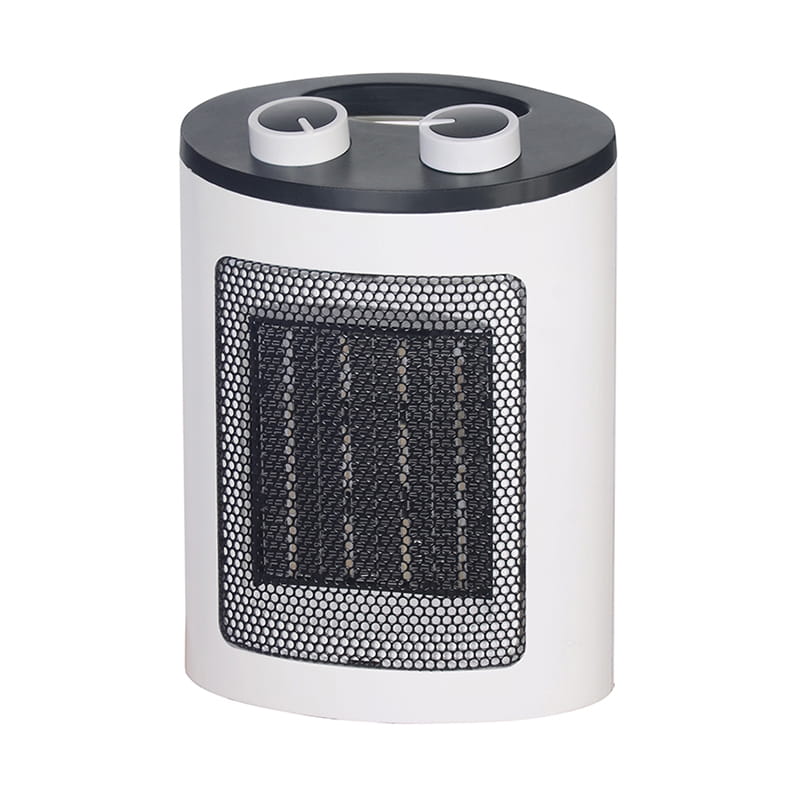 Wholesale 1500W Samll Size Mechanical Control Home Heater Suppliers, Factory - NNingbo Shuaige Electric Appliance Co., Ltd is China OEM 1500W Samll Size Mechanical Control Home Heater suppliers and ODM 1500W Samll Siz...View Product →
Living rooms and larger open areas
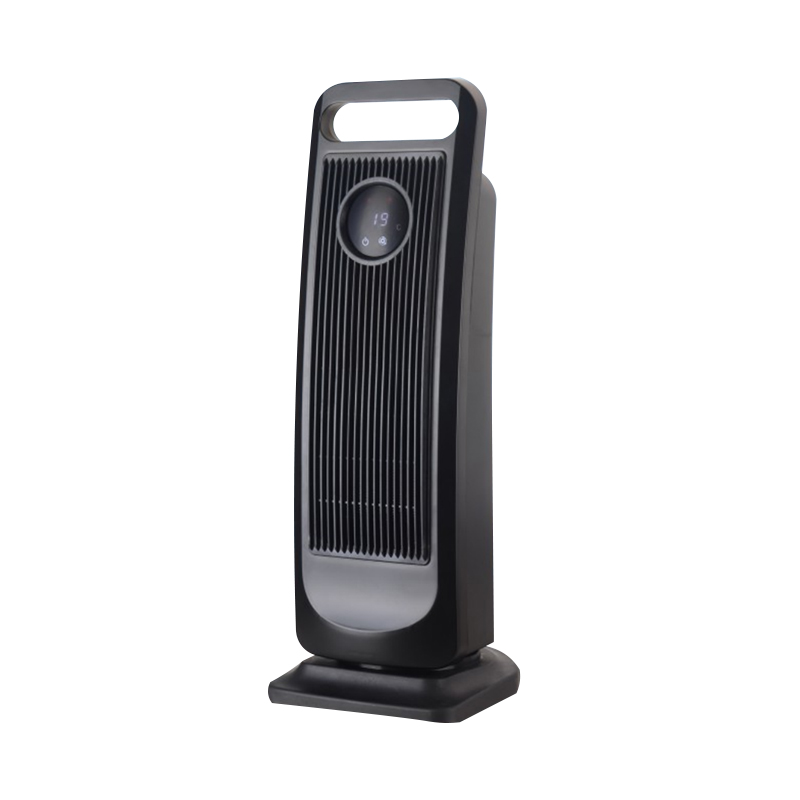
If you need wide heat coverage, an oscillating ceramic tower fan heater with remote control can push warm air across a larger room while rotating, and remote operation means you can adjust it from the sofa.
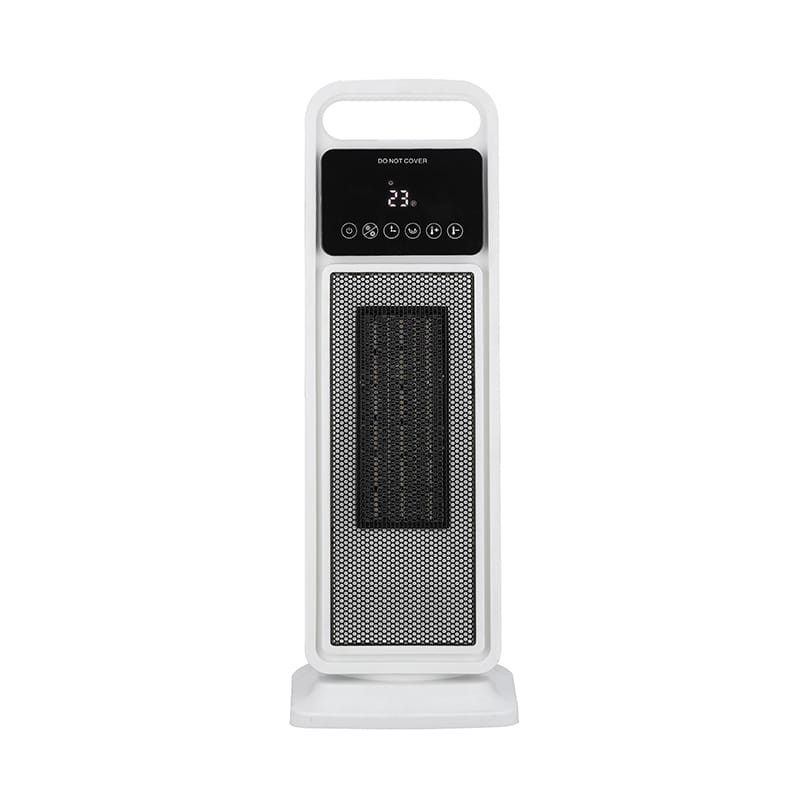 Wholesale Oscillating Ceramic Tower Electric Space Heater With Remote Suppliers,Ningbo Shuaige Electric Appliance Co., Ltd is China OEM Oscillating Ceramic Tower Electric Space Heater With Remote suppliers and ODM Osc...View Product →
Fixed installations and tight floor space
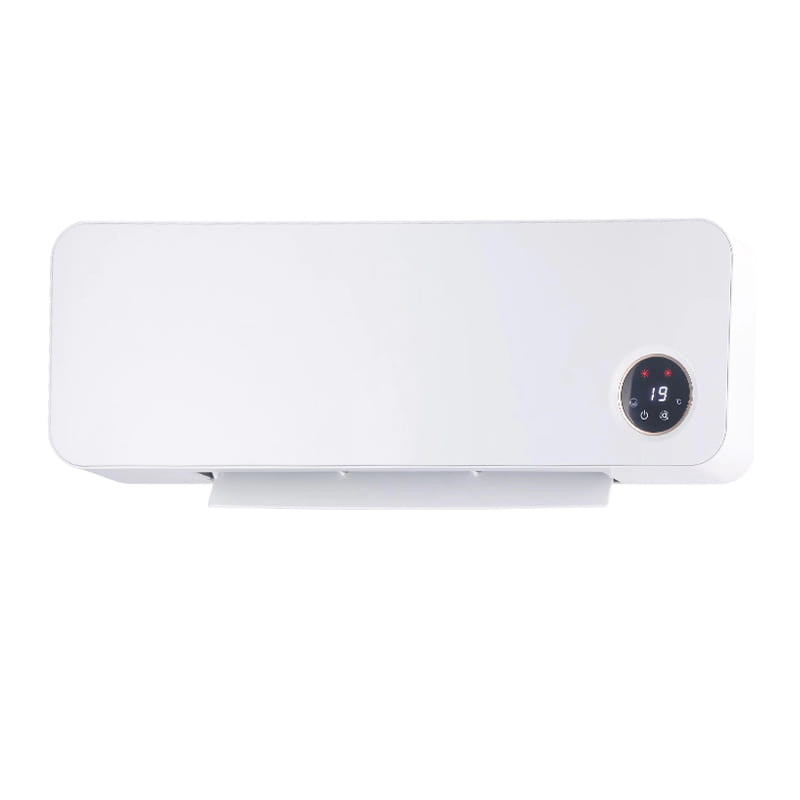
For a hallway, baby room, or any spot where floor space is precious, a wall-mounted ceramic fan heater keeps the heat source out of the traffic zone while still delivering forced-air warmth.
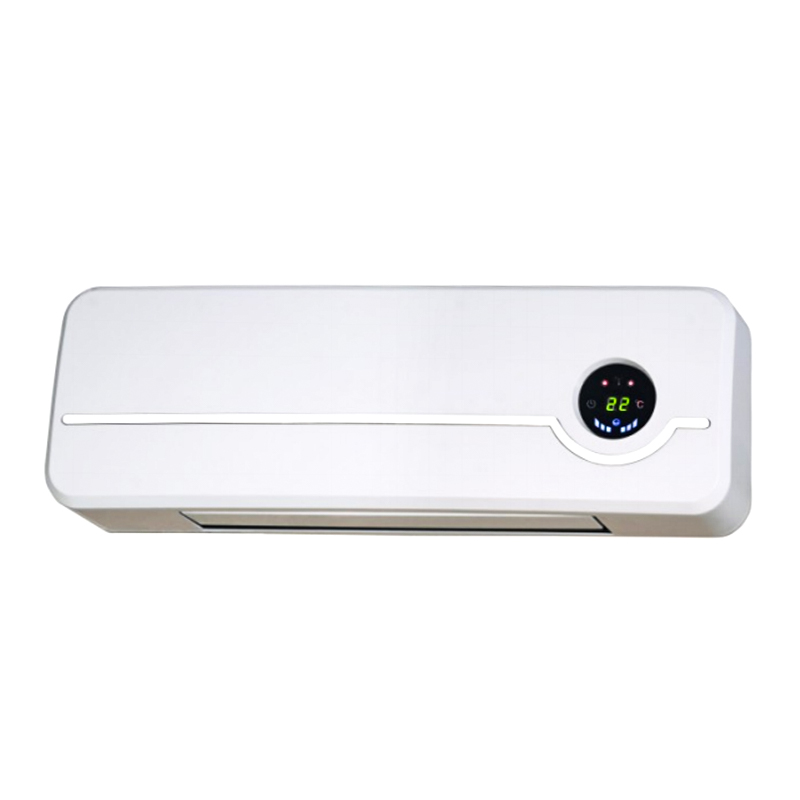 Wholesale Intelligent Temperature Control Wall-Mounted Air Conditioner SuppliersNingbo Shuaige Electric Appliance Co., Ltd is China OEM Intelligent Temperature Control Wall-Mounted Air Conditioner suppliers and ODM In...View Product →
When a cheap fan-forced heater still makes sense
A basic fan-forced model is a reasonable emergency heater—say, for a garage or utility room you only use for 20 minutes. Just avoid leaving it on overnight or near curtains, and accept that the coil will be hot enough to ignite dust.
Ceramic fan heaters are available from 600W personal units to 3000W high-power models.
What Buyers Often Miss: Safety and Running Costs
Every resistive space heater converts almost all electricity into heat. That means a 1500W fan-forced heater and a 1500W ceramic heater produce the same total heat. The practical difference is how often the thermostat overshoots and how hot the surfaces become.
The PTC element is the safety hero. Because its resistance climbs with temperature, it naturally throttles down when airflow is blocked—for example, if the heater is pushed against a chair. A metal coil has no such self-limiting behavior; it stays at full heat until a separate thermostat clicks off.
That is why ceramic PTC heaters are often recommended for households with kids or pets. For more detail, see our piece on tower ceramic fan heater safety and whether ceramic heaters consume a lot of electricity.
Ceramic Fan Heater FAQs
Q1: Can I leave a ceramic fan heater on all night?
A1: Many PTC ceramic models with tip-over and overheat protection are safer than coil fan heaters, but always follow the manual and keep the heater away from bedding. For continuous room warming, wall-mounted or tower ceramic units are better choices.
Q2: Do ceramic heaters use more electricity than fan-forced heaters?
A2: No. Both are resistive heaters, so each 1000W of power creates roughly the same heat. Ceramic models often control temperature more steadily, which can reduce the cycling that wastes energy.
Q3: Are ceramic heaters quieter than fan-forced heaters?
A3: Generally yes. Both have fans, but ceramic units can run at lower speed because the PTC element does not need to be cooled by a roaring airstream. Expect a soft fan hum rather than loud coil noise.
Q4: Which heater is safer for a bedroom?
A4: A ceramic PTC heater is safer because the element surface stays lower and the housing is cooler to the touch. A fan-forced metal-coil heater can overheat nearby fabrics and is not ideal for sleeping areas.

-
Feedback
Related products




Copyright© Ningbo Shuaige Electric Appliance Co., Ltd. All Rights Reserved
