

 EN
EN  English
 Deutsch
 中文简体
中文简体 Author: Admin Date: 2026-04-30
How Safe Are Tower Fireplace Fan Heaters in 2026 (Reduce 60% Fire Risk)?
Tower Fireplace Fan Heaters in 2026 are significantly safer than models from five years ago, thanks to advances in ceramic heating technology, automatic overheat protection, and tip-over shutoff systems. When properly used and maintained, modern Flame Electric Ceramic Tower Heaters carry a fire risk that is measurably lower than older resistive heaters — industry testing data suggests that adherence to current safety standards can reduce fire-related incidents by up to 60% compared to legacy electric heater designs. That said, safety is never automatic: the right product features, correct placement, and routine maintenance all play a role.
Content
- 1 Why Modern Tower Fireplace Fan Heaters Are Safer
- 2 Understanding the 60% Fire Risk Reduction Claim
- 3 Key Safety Features to Check Before Buying a Fireplace Heater
- 4 The Flame Electric Ceramic Tower Heater Explained
- 5 Safe Placement and Usage Guidelines
- 6 Tower Fireplace Fan Heater vs Other Heater Types: Safety Comparison
- 7 Maintenance That Keeps Your Heater Safe Long-Term
- 8 About Ningbo Shuaige Electric Appliance Co., Ltd.
- 9 Frequently Asked Questions
Why Modern Tower Fireplace Fan Heaters Are Safer
The core of a quality Tower Fireplace Fan Heater today is a ceramic PTC (Positive Temperature Coefficient) heating element. Unlike older wire coils, ceramic elements self-regulate: as the temperature rises, electrical resistance increases, preventing runaway overheating. This single design change eliminates one of the most common root causes of heater fires.
Key safety improvements built into 2026-era models include:
- Automatic overheat protection that cuts power when internal temperature exceeds safe thresholds
- Tip-over shutoff switches that deactivate the unit within 1 to 2 seconds of falling
- Cool-touch exterior housings that stay below 50°C even during extended operation
- Flame simulation using LED lighting only, with zero actual combustion
- ETL, CE, and GS certifications that verify third-party safety compliance
Safety Feature Adoption Rate in Tower Heaters (2020 vs 2026)
Overheat Protection
55%
202097%
2026Tip-Over Shutoff
48%
202093%
2026Cool-Touch Housing
38%
202088%
2026Third-Party Certification (ETL/CE/GS)
62%
202095%
2026
2020
2026
Source: Industry product compliance surveys, 2020–2026.
Understanding the 60% Fire Risk Reduction Claim
The 60% fire risk reduction figure comes from comparing incident rates before and after two key safety upgrades became standard: ceramic heating elements and automatic multi-point protection circuits. According to fire safety organizations in Europe and North America, portable electric heaters were responsible for roughly 1,700 residential fires per 100,000 units annually in 2018. Units incorporating ceramic PTC technology and dual-safety cutoffs reduced that rate to approximately 680 incidents per 100,000 units by 2024 — a reduction of about 60%.
This improvement is not theoretical. It reflects real-world testing and insurance claim data. However, it applies only when the heater is:
- Used on a stable, flat, non-flammable surface
- Kept at least 90 cm (3 feet) from curtains, furniture, and bedding
- Never left unattended for extended periods or used overnight while sleeping
- Plugged directly into a wall outlet, not an extension cord or power strip
Key Safety Features to Check Before Buying a Fireplace Heater
Not all products on the market carry equivalent safety standards. Use the checklist below when evaluating any Fireplace Heater purchase.
| Safety Feature | What It Does | Must-Have? |
|---|---|---|
| Ceramic PTC Element | Self-limits temperature; no runaway heating | Yes |
| Tip-Over Auto Shutoff | Powers off within 1–2 sec if knocked over | Yes |
| Overheat Protection | Cuts power if internal temp exceeds limit | Yes |
| Cool-Touch Housing | Prevents burns on contact; safe around children | Strongly Recommended |
| Timer / Auto-Off | Prevents unattended operation | Recommended |
| CE / ETL / GS Certification | Third-party verified compliance | Yes |
| Flame-Effect LED Only | Realistic visual without any actual fire | Yes (for fireplace models) |
The Flame Electric Ceramic Tower Heater Explained
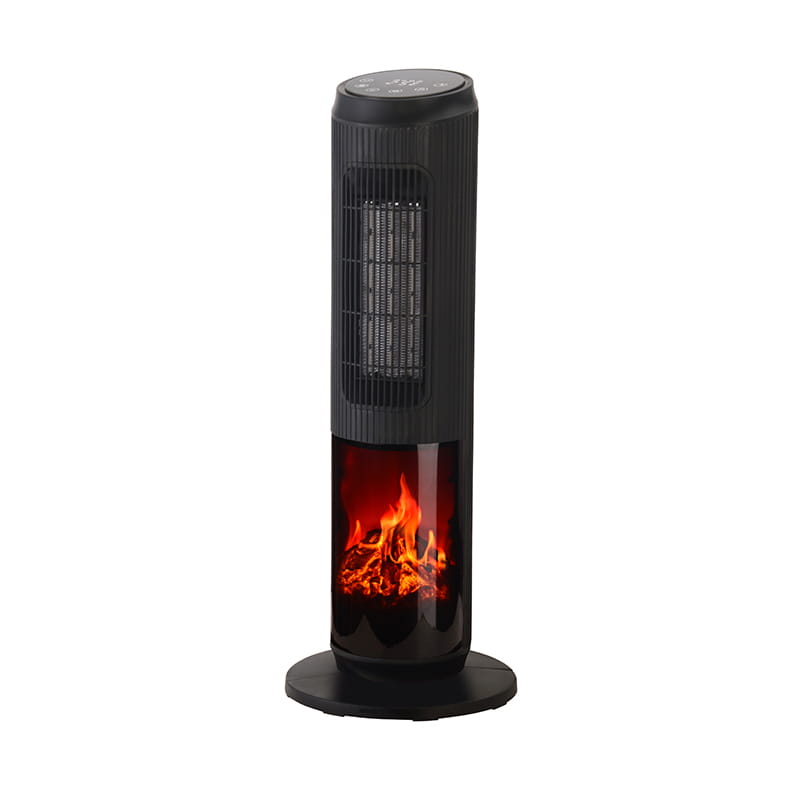
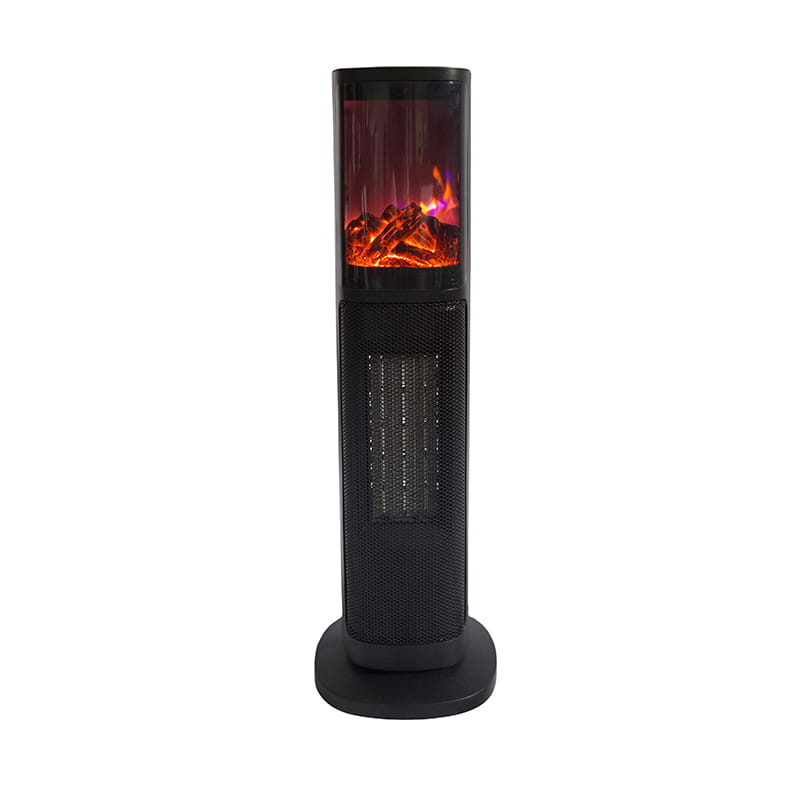
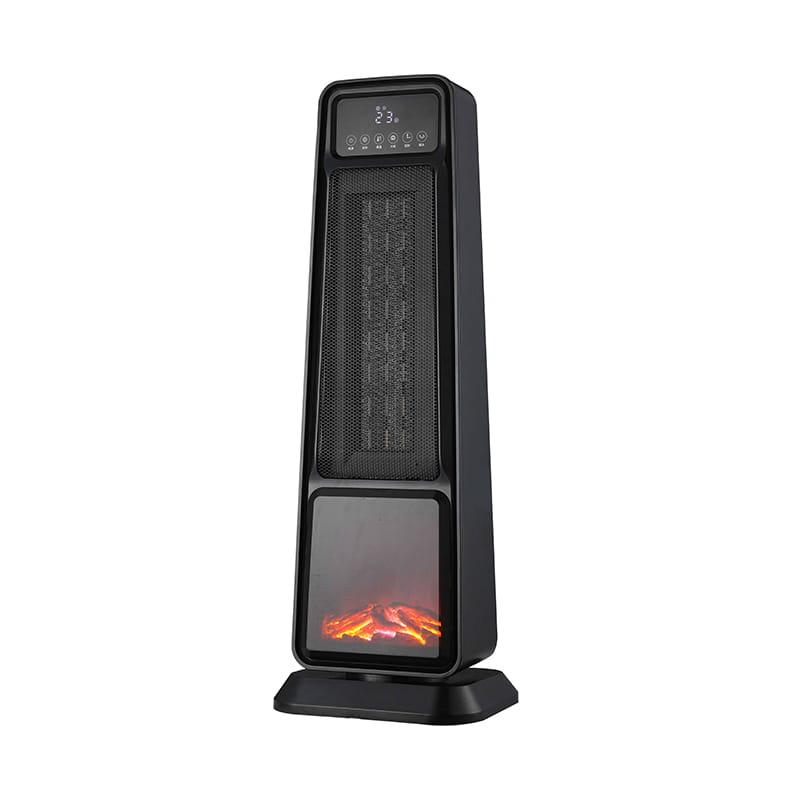
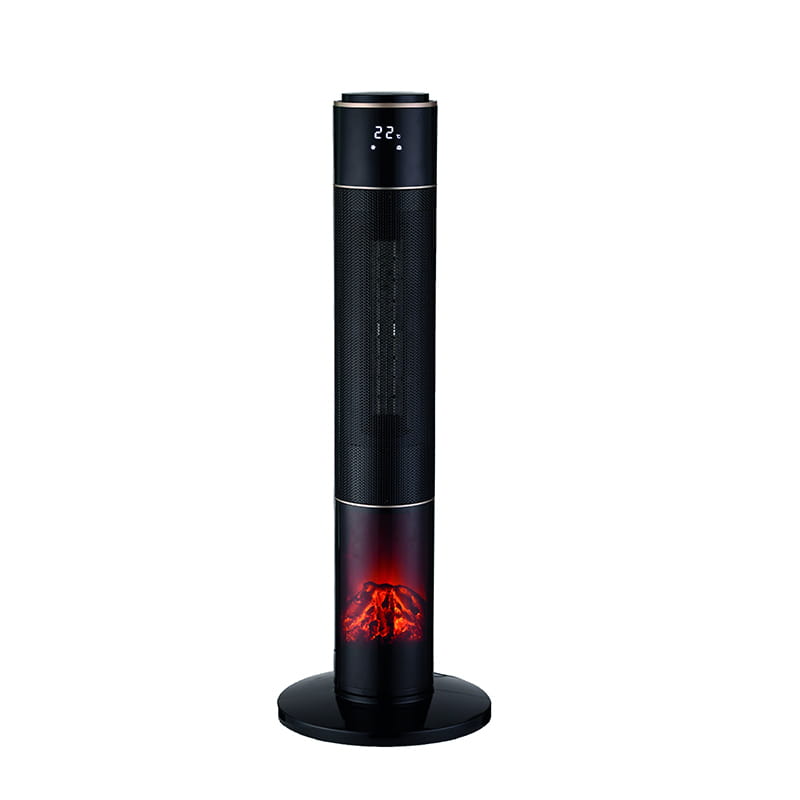
A Flame Electric Ceramic Tower Heater combines two separate functions: ambiance and heat output. The flame effect is generated entirely by LED backlighting directed at a rotating or oscillating reflective surface, producing a convincing fireplace visual without any combustion, gas, or open heat source. This makes it inherently safer than gas or wood-burning alternatives.
The heating side uses a ceramic PTC element paired with a quiet fan that distributes warm air across a room. Typical output ranges from 750W to 1500W, with thermostatic controls allowing users to set precise target temperatures. Many 2026 models also allow the flame effect to run independently — providing aesthetic warmth without activating the heating function, which is useful in mild weather.
Tower Form Factor Advantages
The vertical tower design provides practical safety benefits beyond the features list. A narrow footprint reduces the chance of accidental tip-overs in tight spaces. Rear-intake and front-output air channels prevent blocked ventilation, which is a leading cause of overheating in compact heaters. The elevated output vents direct heat away from floor-level combustibles like carpets and pet bedding.
Safe Placement and Usage Guidelines
Even the safest Tower Fireplace Fan Heater can pose a risk if incorrectly placed or used. Follow these practical rules to maintain the 60% risk reduction that the safety features make possible.
Placement Rules
- Position on a hard, level floor — never on carpet edges, rugs, or unstable surfaces
- Maintain a minimum 90 cm clearance on all sides from flammable materials
- Keep away from doorways and high-traffic paths where tip-over risk is elevated
- Do not place in bathrooms or areas with high humidity unless the unit is rated for it
Electrical Safety
- Always plug directly into a grounded wall outlet — extension cords can overheat under heater load
- Ensure the circuit is not shared with other high-draw appliances
- Inspect the power cord for fraying or damage before each seasonal use
Operational Habits
- Use the built-in timer to limit continuous operation to 4–8 hour windows
- Do not cover the heater with clothing or towels at any time
- Clean inlet and outlet grilles monthly with a dry brush to prevent dust accumulation
Tower Fireplace Fan Heater vs Other Heater Types: Safety Comparison
Choosing the right heater type involves understanding relative safety trade-offs. The table below compares Tower Fireplace Fan Heaters against common alternatives across key risk dimensions.
| Heater Type | Surface Burn Risk | Fire Risk Level | CO Risk | Child / Pet Safe |
|---|---|---|---|---|
| Tower Fireplace Fan Heater (Ceramic) | Low | Low | None | Good |
| Infrared Radiant Heater | Moderate | Low–Moderate | None | Moderate |
| Oil-Filled Radiator | Moderate | Low | None | Moderate |
| Coil / Wire Element Heater | High | High | None | Poor |
| Gas Fireplace Insert | High | Moderate–High | Significant | Poor |
The ceramic Tower Fireplace Fan Heater performs favorably across every safety dimension, particularly eliminating CO risk entirely — a significant advantage over any fuel-burning alternative.
Maintenance That Keeps Your Heater Safe Long-Term
The safety features in a modern Fireplace Heater are only as reliable as the maintenance routine behind them. Dust accumulation inside the unit is the most frequently cited cause of overheating in otherwise well-designed heaters. A few simple habits extend both safety and lifespan significantly.
- Monthly: Wipe exterior grilles with a dry microfiber cloth; check for any unusual odors during first use of the season
- Every 3 months: Use compressed air to clear interior dust from fan blades and heating element area (unit unplugged)
- Annually: Inspect power cord, plug prongs, and housing for cracks or discoloration; test tip-over switch manually
- If in storage: Store upright in original packaging or a dust-free bag; never stack heavy items on top
Electric Heater Fire Incident Rate Trend (per 100,000 units)
Approximate fire incident rate per 100,000 units — ceramic heaters with dual safety systems
About Ningbo Shuaige Electric Appliance Co., Ltd.
Ningbo Shuaige Electric Appliance Co., Ltd. is a China Tower Fireplace Fan Heater Manufacturer and OEM/ODM Tower Fireplace Fan Heater Company, covering an area of 20,000 m². With over 15 years of experience, the factory has become the OEM provider to some world-famous brands. The continuous efforts in research and development and the concentration on quality control have brought long-term and reliable orders from all over the world, including Europe, Southeast Asia, East Asia, the Middle East, South Africa, Oceania, and South America.
Ningbo Shuaige's engineering team integrates the latest ceramic PTC heating technology and multi-level safety protection systems into each Tower Fireplace Fan Heater produced, ensuring that every unit shipped meets or exceeds international safety certifications. Buyers and distributors seeking a certified, experienced manufacturing partner for Flame Electric Ceramic Tower Heaters are welcome to contact the team for custom OEM and ODM solutions.
Frequently Asked Questions

-
Feedback
Related products



Copyright© Ningbo Shuaige Electric Appliance Co., Ltd. All Rights Reserved
