

 EN
EN  English
 Deutsch
 中文简体
中文简体 Author: Admin Date: 2026-09-23
How Much Electricity Does a 1500 Watt Heater Use? Full kWh & Cost Guide
A 1,500-watt space heater uses 1.5 kilowatt-hours (kWh) of electricity for every hour it runs at full power. At the latest U.S. average residential rate of about 17 cents per kWh (U.S. Energy Information Administration), that costs roughly 25 cents per hour — around $2.00 for eight hours of continuous heating. That makes a 1,500W heater one of the biggest single loads in a home, but it is also why targeted zone heating with a compact heater can be cheaper than warming the whole house.
The rated wattage is the maximum draw, not the average. A heater with a working thermostat regularly pulls much less than 1.5 kW over a full day. This guide walks through the calculation, what to expect on your electricity bill, and the practical ways to keep the number as low as possible.
Content
- 1 The Simple Math: Watts to Kilowatt-Hours
- 2 What It Actually Costs Per Hour Across U.S. Rates
- 3 Why Most Heaters Use Less Than 1.5 kWh Per Hour
- 4 Can Your Circuit Handle a 1,500W Heater?
- 5 Is a 1,500W Heater Cheaper Than Central Heating?
- 6 Seven Practical Ways to Reduce Your Heating Bill
- 7 Inside a PTC Ceramic Fan Heater: Self-Regulating Heat
- 8 Frequently Asked Questions
The Simple Math: Watts to Kilowatt-Hours
Your electricity meter records kilowatt-hours. The conversion is simple:
kWh = (watts × hours used) ÷ 1,000
For a 1,500W heater: one hour equals 1.5 kWh, eight hours equals 12 kWh, and 24 hours equals 36 kWh. The table below translates those values into a monthly bill at the typical U.S. average of 17 cents per kWh.
| Daily runtime | Daily consumption | Estimated monthly cost |
|---|---|---|
| 3 h at full power | 4.5 kWh | $23 |
| 6 h at full power | 9.0 kWh | $46 |
| 8 h at full power | 12.0 kWh | $61 |
| 12 h at full power | 18.0 kWh | $92 |
The values above assume the heater never switches off. In reality, thermostats cycle the unit on and off, so consumption is almost always lower than these figures. If you are looking for a simple, dependable 1,500W model, a compact PTC fan heater with mechanical controls and a tip-over switch is the most common choice for bedrooms and home offices.
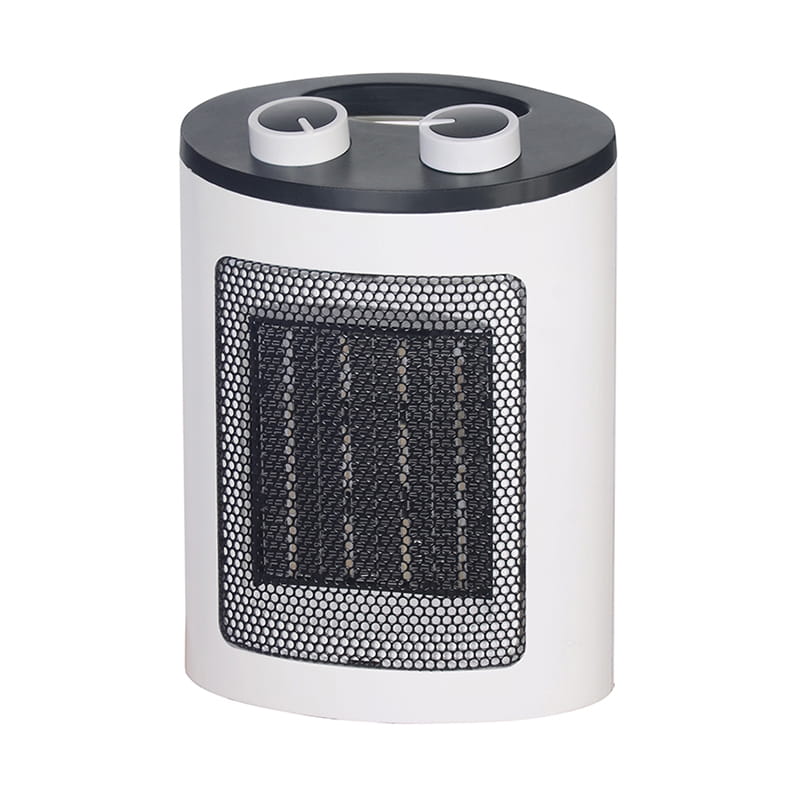 Compact 1500W PTC Fan Heater with Mechanical ControlsThis compact 1500W PTC heater offers two heat settings and a thermostat, making it a straightforward choice for bedrooms or home offices. Its handle and tip-over switch add convenience and safety for everyday use.View Product →
What It Actually Costs Per Hour Across U.S. Rates
Electricity prices vary by state and region. The U.S. average sits near 17 cents per kWh, but some states pay less than 12 cents while others pay more than 30 cents. To find your own hourly cost, multiply your rate by 1.5 kW.
Hourly cost = electricity rate ($/kWh) × 1.5 kW
Reading the chart: at 17 cents per kWh, one hour of full-power heating costs about 26 cents, and eight hours adds roughly $2.04. At 30 cents per kWh, the same eight-hour session jumps to $3.60. If your utility uses time-of-use pricing, run the heater during off-peak hours when the rate drops.
Why Most Heaters Use Less Than 1.5 kWh Per Hour
A heater with a thermostat does not run continuously. Once the room reaches the set temperature, the unit cycles off until the air cools again. In a typical bedroom or office, a 1,500W PTC ceramic fan heater operates at a 40 to 60 percent duty cycle, which means the average draw is closer to 0.6–0.9 kW.
The line chart compares continuous full-power operation with a realistic 50 percent cycling pattern. The gap grows quickly over a month.
This is why a heater's build quality affects running costs. Models with accurate thermostats, multiple heat settings, and PTC ceramic elements switch off cleanly and hold the set temperature without overshooting and wasting energy. We looked at this issue in detail in our analysis of whether ceramic heaters consume a lot of electricity.
Can Your Circuit Handle a 1,500W Heater?
Electrical draw matters as much as the bill. In the Americas, a 1,500W heater at 120V pulls 12.5 amps: 1,500 ÷ 120 = 12.5. A standard 15-amp branch circuit can feed it, but there is little margin left for lamps, monitors, or other devices on the same circuit. Continuous loads should not exceed 80 percent of a breaker rating, so a 15-amp breaker should carry no more than 12 amps. That effectively means running the heater alone.
In 230V markets — Europe, Asia, Australia, and most other regions — the same heater draws about 6.5 amps and shares a circuit much more comfortably.
Plug the heater into a wall socket directly or use a heavy-duty extension cord rated at 15 amps or higher. Long, thin extension cords are the leading cause of overheating with portable heaters.
Is a 1,500W Heater Cheaper Than Central Heating?
For a single occupied room, usually yes. A central furnace heats the entire home and loses heat through ducts, while a 1,500W heater delivers heat exactly where you are. If your daily routine is eight hours in a home office, heating just that room can cost $1.50–$2.50 per day instead of $4–$8 for the whole house.
For whole-home conditions or very large open spaces, the comparison reverses: a heat pump or modern gas furnace produces more heat per kilowatt-hour than a resistance heater. Use the 1,500W heater as a supplement rather than a replacement when temperatures drop far below freezing.
If you need directed warmth in a larger room, an oscillating 1,500W fan heater spreads the air more evenly and cuts down hot and cold spots.
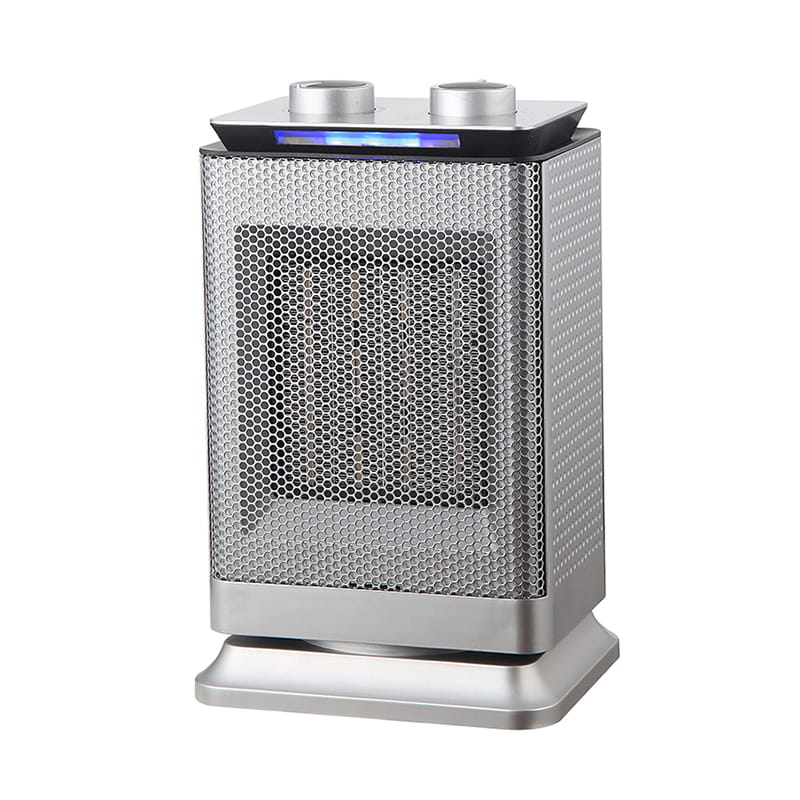 Oscillating 1500W Ceramic Heater with LED Indicator and Safety FeaturesAn oscillating 1500W ceramic heater with two heat settings, adjustable thermostat, and tip-over protection. The oscillation helps distribute warmth evenly in larger rooms, while the LED indicator clearly shows operation status.View Product →
Seven Practical Ways to Reduce Your Heating Bill
These habits lower consumption without sacrificing comfort:
- Lower the thermostat slightly. Each degree Celsius you reduce the setpoint cuts heating energy by roughly 5 to 8 percent.
- Use a timer or smart plug. There is no reason to heat rooms that will be empty for hours.
- Block drafts. Seal gaps around windows and doors, and close curtains at night to keep heat inside.
- Position the heater centrally. Place it on a hard, level floor with at least one meter of clearance so air can circulate freely.
- Switch to a lower heat setting once warm. A lower setting holds the temperature with noticeably less energy.
- Keep the inlet and outlet clean. Dust on the grilles reduces airflow and raises the energy needed for the same warmth.
- Match the heater size to the room. One 1,500W unit handles a typical 150–300 square foot well-insulated room; adding extra units increases the load without adding much comfort.
Inside a PTC Ceramic Fan Heater: Self-Regulating Heat
PTC (positive temperature coefficient) ceramic elements differ from old nichrome wire elements in one key way: their resistance rises as temperature climbs. At start-up, the cold element draws more current for fast heating, but once it is hot, the rising resistance limits current automatically. That self-regulating behavior trims consumption whenever the core gets too hot.
The layout is the same in most portable PTC fan heaters: a rear intake, an axial fan, a ceramic core with aluminum fins, and a front outlet. The thermostat and tip-over switch are safety components that also cut waste by switching off quickly when airflow is blocked or the unit tips over.
For a quieter, personal-size unit that fits a desk or nightstand, a 1,500W indoor PTC heater draws only about 6 kWh across a typical eight-hour night when the thermostat cycles normally.
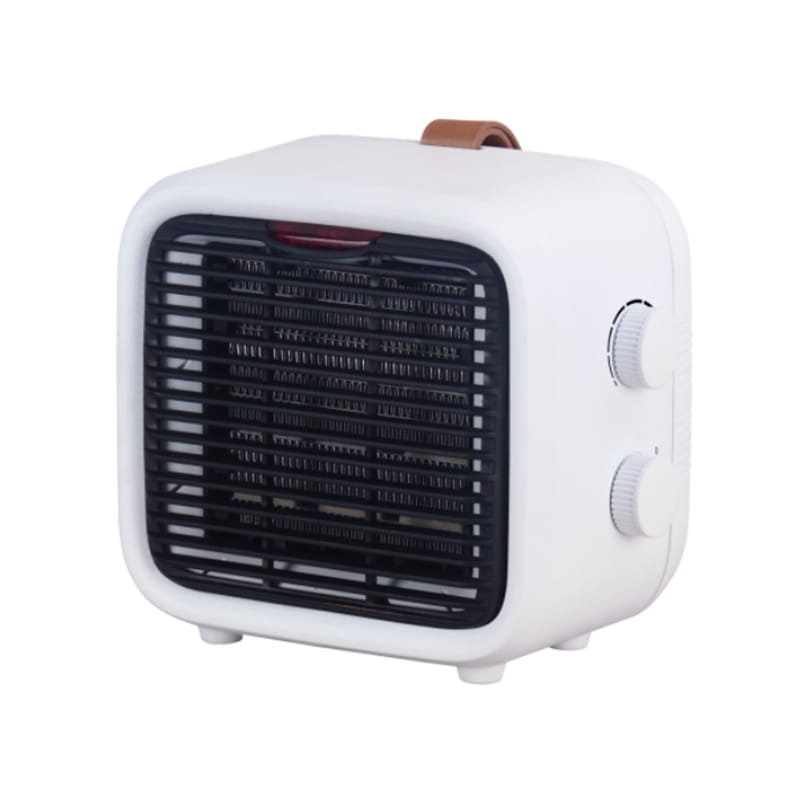 Personal Mini 1500W Indoor Ceramic Heater with Two SettingsThis compact 1500W ceramic heater is designed for small spaces, offering quick heating with two power settings. Its simple controls and safety features make it a cost-effective option for desktops or nightstands.View Product →
Frequently Asked Questions
Q1. How much does it cost to run a 1500W heater for 8 hours?
About $2.04 at the U.S. average of 17¢/kWh (1.5 kW × 8 h × $0.17). With thermostat cycling, most homes see $1.20–$1.80 for the same session.
Q2. How many kWh does a 1500 watt heater use in 24 hours?
36 kWh if it never cycles off. In a thermostatically controlled room, expect roughly 14–22 kWh because the heater switches on and off to hold the set temperature.
Q3. Will a 1500W heater trip a breaker?
It draws 12.5A on a 120V circuit. A 15A breaker is at its continuous-load limit, so use a wall outlet with nothing else substantial on the same circuit.
Q4. Do ceramic heaters use a lot of electricity?
Every 1,500W resistance heater uses the same 1.5 kWh per hour at full power. PTC ceramic units stand out because they self-regulate and cycle off sooner, lowering real-world consumption.
Q5. Is it cheaper to run a space heater than central heating?
For one occupied room, usually yes: about $1.50–$2.50 per day for eight hours versus $4–$8 for whole-house heating. For multiple rooms, a heat pump or furnace is more efficient per unit of heat.
Q6. Can I leave a 1500W heater on all night?
Modern PTC fan heaters with overheat protection and tip-over switches can run overnight, but lower the setpoint, keep fabrics clear, and never use an undersized extension cord.

-
Feedback
Related products




Copyright© Ningbo Shuaige Electric Appliance Co., Ltd. All Rights Reserved
