

 EN
EN  English
 Deutsch
 中文简体
中文简体 Author: Admin Date: 2026-09-16
Are all space heaters the same: Applications, Selection Criteria, and Practical Guidance
No, all space heaters are not the same — and if you answer that question by looking at wattage alone, you will miss the differences that matter most. Every electric heater converts nearly all of the electricity it draws into heat. But how that heat reaches your body, how evenly it fills the room, how safely the unit behaves on a carpet, and how long it still works in year five are questions of design, material quality, and thermal control — not of wattage. As a manufacturer of PTC ceramic fan heaters with more than 15 years of production experience, we have seen what happens when buyers compare heaters as if they were identical boxes.
This guide walks you through which parts of a space heater are truly identical across models, which ones vary, and how to pick the right unit for your room, your habits, and your safety budget.
Content
- 1 Every electric heater produces the same amount of heat
- 2 Where space heaters actually differ: heat delivery, noise, and control
- 3 Safety features are the real difference between cheap and reliable heaters
- 4 Ceramic, oil-filled, or infrared: which should you choose?
- 5 Match the heater to the room, not the other way around
- 6 Frequently asked questions
Every electric heater produces the same amount of heat
Let us start with the part that is identical. Electric resistance heating — whether from a PTC ceramic element, a metal coil, an oil-filled radiator, or a quartz tube — is close to 100% efficient at converting electricity into heat. According to the U.S. Department of Energy, electric resistance heating converts nearly all purchased energy into heat. A 1500W unit therefore releases roughly 1.5 kW of heat, or about 5120 British thermal units per hour, regardless of brand, price, or housing material. This is why the 1500W rating dominates the market: it draws a standard household circuit close to its safe limit while delivering the most heat allowed by a normal outlet.
Heat output = wattage × 3.412 BTU/h. All electric heating technologies follow the same rule.
This also means you cannot make a space heater more efficient than another electric unit in the physics sense. The real savings come from not wasting the heat you create: using a thermostat, placing the unit close to you, and preventing heat from escaping. To understand how consumption works in practice, read our breakdown of how much electricity ceramic heaters really use.
Where space heaters actually differ: heat delivery, noise, and control
If the wattage is fixed, the experience of staying warm is decided by heat delivery, not heat production. A forced-convection heater pushes air across a hot element with a fan, so you feel warmth within a minute or two. An oil-filled radiator heats the oil, then the metal fins, then the air by natural convection — comfortable and silent, but slow. An infrared heater radiates energy directly to people and objects, so you feel warm while the room air may still be cold.
| Type | Heat delivery | Room warm-up | Noise | Best for |
|---|---|---|---|---|
| PTC ceramic fan heater | Forced convection | Fast | Low fan hum | Small–medium rooms, quick warmth |
| Oil-filled radiator | Natural convection | Slow and steady | Silent | Bedrooms, all-night use |
| Infrared quartz heater | Radiant | Instant, but only what it faces | Silent | Desks, reading corners, garages |
| Convection panel heater | Natural convection | Medium | Silent | Long, low-intensity background warmth |
Because a fan heater moves air, its thermostat can cycle on and off as the whole room warms — which is where efficiency in practice comes from. With a radiant heater, you tend to run it continuously because the air temperature lags behind your comfort level. The same physics means that all of these units will cost nearly the same to run at the same wattage, as shown below.
Assumes continuous full-power operation. A good thermostat reduces this figure in practice.
Safety features are the real difference between cheap and reliable heaters
In our experience as a factory that certifies and exports heaters to markets with strict safety regimes, the gap between a $20 heater and a $100 heater is mostly invisible until something goes wrong. The housing, the wire gauge, the quality of the tip-over switch and thermal cutoff, and the flame-retardant rating of the plastic are exactly the parts a specification sheet rarely shows.
Here is what a properly designed PTC ceramic fan heater looks like inside:
Schematic cutaway: air enters at the back, passes the motor and fan, is heated by the ceramic element, and leaves through the front grille.
Before you buy, check for these features:
- Tip-over switch: cuts power if the unit falls at an angle of roughly 30 degrees or more.
- Overheat protection: a thermal cutoff that stops heating if the internal temperature exceeds the safe limit.
- Flame-retardant housing: the casing material should be rated UL94 V-0 or equivalent.
- Cool-touch exterior and a stable base that does not rock on carpet.
- Recognized certification marks such as CE, GS, UL, or ETL.
| Feature | Function | Risk if missing |
|---|---|---|
| Tip-over switch | Cuts power when the heater tilts | Fire risk if the unit falls on bedding or carpet |
| Overheat protection | Shuts off the element above a safe temperature | Melted components, smoke, fire |
| Cool-touch housing | Keeps the outer shell at a safe temperature | Burns to children and pets, heat damage to furniture |
| Certifications (CE, GS, etc.) | Independent verification of construction quality | No guarantee the product was safety-tested |
Ceramic, oil-filled, or infrared: which should you choose?
The radar chart below summarizes how the three leading categories compare on the points that matter in real rooms. These are typical characteristics, not lab measurements; the right choice depends on your room and your habit of use.
Editorial 1–5 rating based on typical heater characteristics; your experience depends on model quality and room conditions.
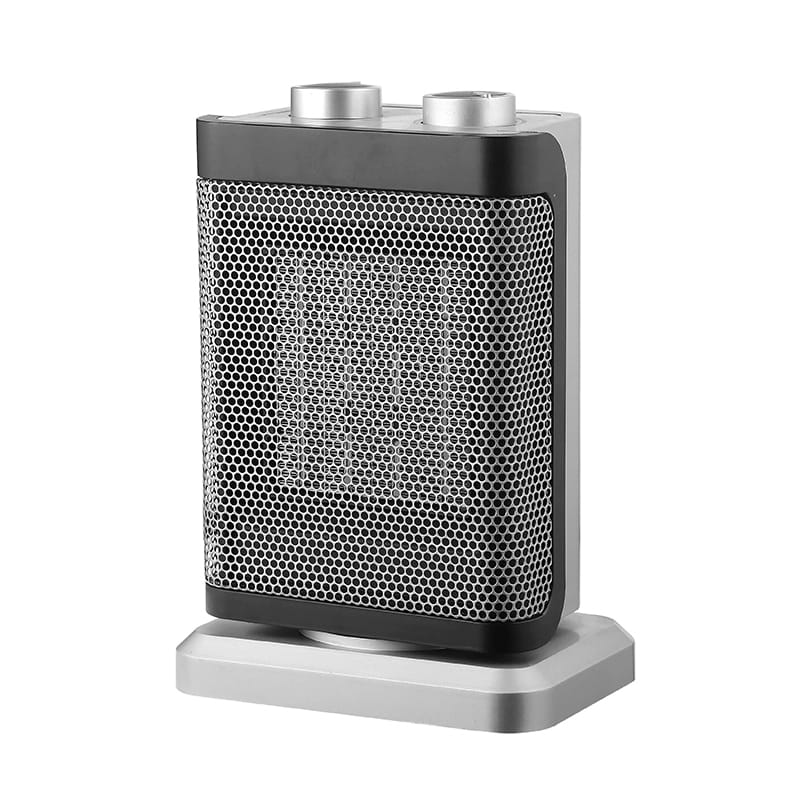
For most homes, a PTC ceramic fan heater offers the best compromise: fast warm-up, even distribution when it oscillates, compact dimensions, and multiple built-in safety devices. A portable ceramic fan heater is particularly useful for bedrooms, home offices, and rental units where installing fixed heating is impractical.
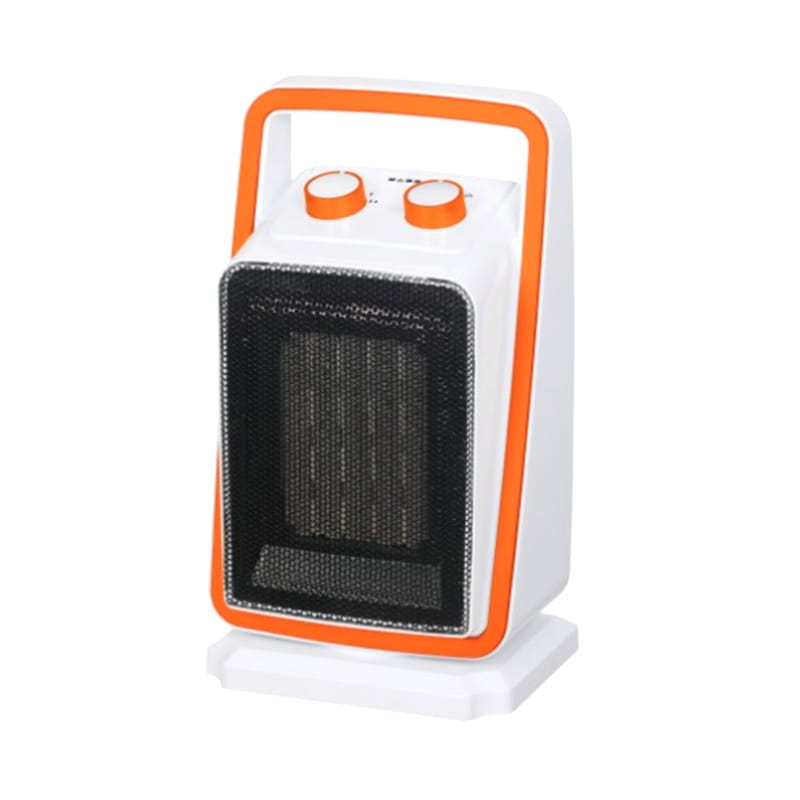 Portable PTC Ceramic Fan Heater with Two Power SettingsThis compact 2000W heater offers 1000W and 2000W settings, oscillation, and safety cut-offs, making it a practical choice for bedrooms or home offices where fixed heating is not an option.View Product →
You can review the available power levels and control options in our portable ceramic fan heater lineup.
Match the heater to the room, not the other way around
Watts are only meaningful relative to the space you need to heat. As a common sizing rule of thumb, a reasonably insulated room needs about 100W per square metre; a 15 m² bedroom sits comfortably at 1500W. Undersizing simply means the heater runs permanently, while oversizing mainly affects how often the thermostat cycles.
- Measure the room area in square metres.
- Multiply by 100W to estimate the needed power.
- Choose a form factor: portable for desks and bedrooms, tower for corners and open living rooms, wall-mounted where floor space is precious.
- Confirm tip-over protection, overheat protection, housing material, and certification before payment.
- Compare controls: mechanical, digital, remote, timer — comfort features that also save energy.
| Room size | Recommended power | Suggested type |
|---|---|---|
| Under 10 m² (bedroom, office) | 600–1000W | Portable PTC fan heater |
| 10–20 m² (bedroom, study) | 1500W | Portable or oscillating tower heater |
| 20–30 m² (living room, open plan) | 2000–2500W | Tower heater with remote, or two units |
| Above 30 m² | 3000W or supplement with radiant heat | High-power PTC unit or multiple heaters |
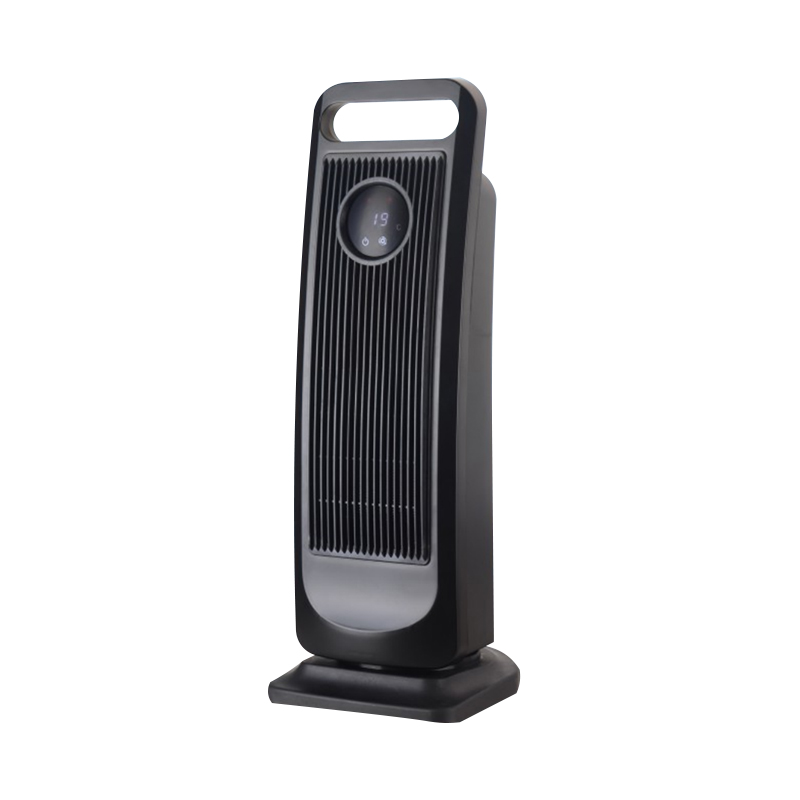
Where floor space is tight, a tower heater with oscillation and remote control distributes warmth through a room without blocking walking paths or requiring clearance on all sides.
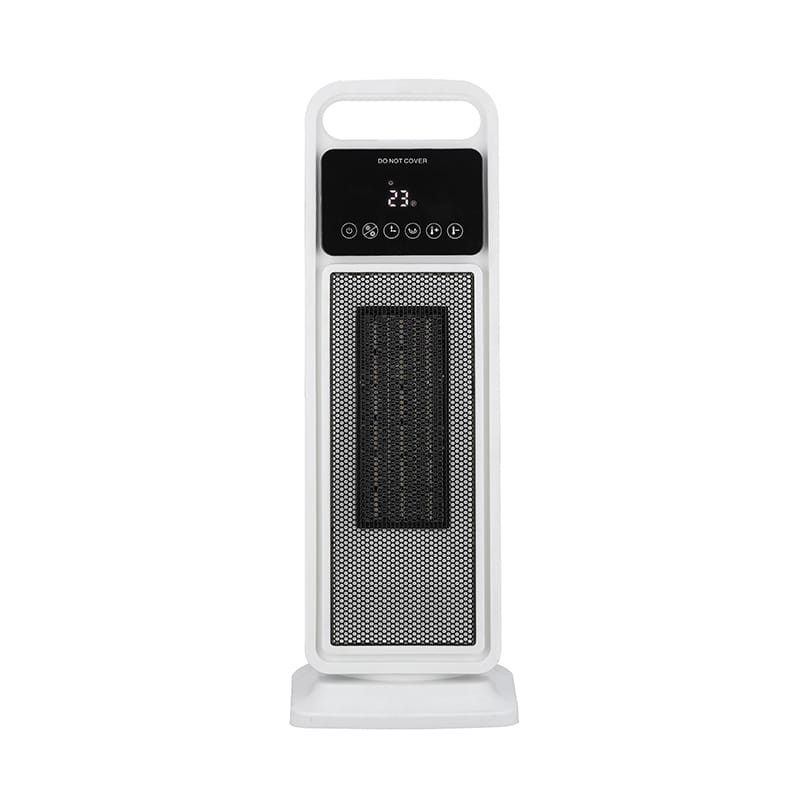 Oscillating Ceramic Tower Heater with Remote ControlDesigned to save floor space, this tower heater delivers even warmth through oscillation and includes remote control, ideal for tight rooms or open layouts while maintaining a compact footprint.View Product →
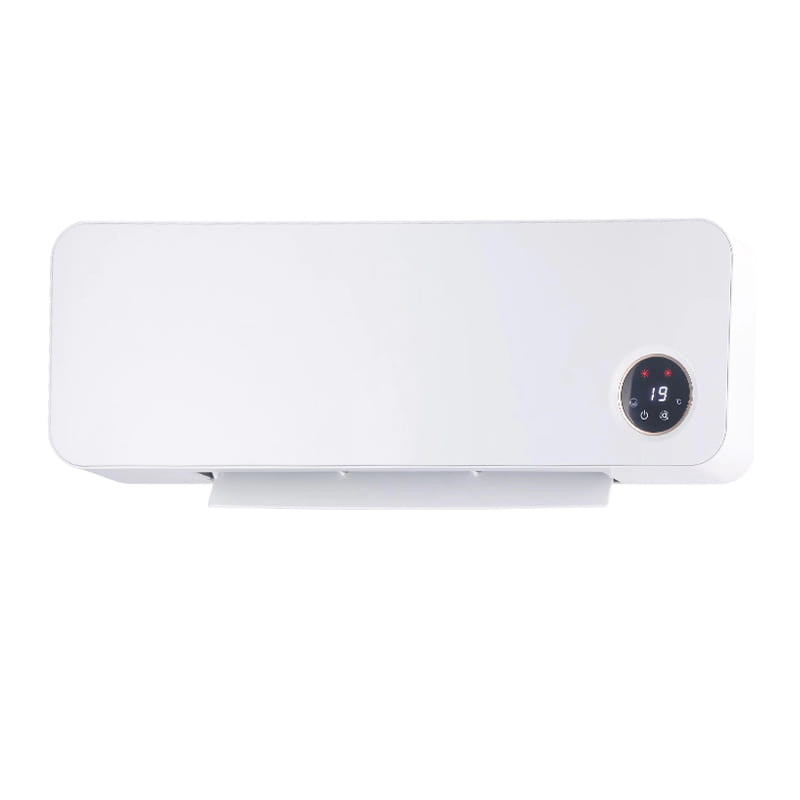
If the room has no space at floor level at all, wall-mounted ceramic heaters keep the heat output while freeing the floor entirely — a popular choice in nurseries, kitchens, and small apartments.
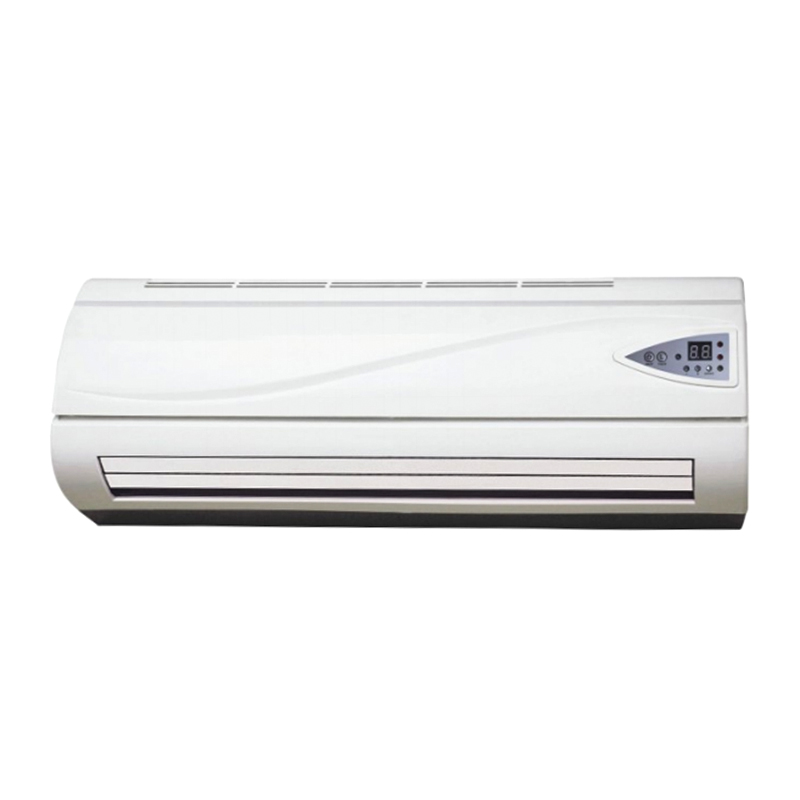 Wall-Mounted Ceramic Fan Heater with Oscillation and RemoteThis heater mounts on walls or tables, features automatic oscillating louvers, a timer, and remote operation, freeing floor space in nurseries, kitchens, or small apartments while providing reliable warmth.View Product →
Frequently asked questions
Here are the questions we hear most often from both retail buyers and wholesale partners.
Q1: Are all 1500W space heaters the same?
No. They all generate a similar amount of heat — about 5120 BTU/h — but they differ in heat distribution, warm-up speed, noise, thermostat quality, safety features, and durability. Wattage only tells you the energy draw, not how well the heater suits your space.
Q2: Are cheap space heaters safe?
Price alone does not determine safety. A lower price often means a thinner housing, fewer protection mechanisms, and a less robust power cord. Look for a tip-over switch, overheat protection, flame-retardant material, and a recognized certification such as CE or GS before buying.
Q3: Which type of space heater is most energy-efficient?
Conversion-wise, all electric heaters are about 100% efficient. The perceived difference comes from controls and distribution: a ceramic fan heater warms the room quickly and lets the thermostat cycle off, which can reduce running time compared with a radiant heater that stays on because the air remains cool.
Q4: Do ceramic heaters use a lot of electricity?
At full power, a 1500W ceramic heater uses 1.5 kWh per hour — around USD 0.30 at a typical rate of 20 cents per kWh. In practice, thermostats and timers lower the average consumption because the element cycles on and off instead of running continuously.
Q5: Why are PTC ceramic heaters considered safer?
A PTC ceramic element has a positive temperature coefficient: as it heats up, its electrical resistance rises and the power draw automatically drops. This self-limiting behavior reduces the risk of overheating and keeps the element from glowing like a metal coil, even if the fan stops.
Q6: Can a space heater be left on all night?
Modern units with overheat protection, a tip-over switch, and a cool-touch case are designed for continuous operation, but placement matters. Keep the heater on a flat, stable surface, at least 50 cm from curtains and bedding, and avoid relying on extension cords. When in doubt, choose a model certified for prolonged unattended use.

-
Feedback
Related products




Copyright© Ningbo Shuaige Electric Appliance Co., Ltd. All Rights Reserved
