

 EN
EN  English
 Deutsch
 中文简体
中文简体 Author: Admin Date: 2026-10-14
How Many Square Feet Will a 1500 Watt Heater Heat? A Realistic Sizing Guide
A 1,500-watt heater will hold roughly 150 square feet at a comfortable indoor temperature — a 12 x 12.5 foot bedroom, or a 10 x 15 foot home office with a standard 8-foot ceiling. In a tight, well-insulated room during a mild winter, the same unit stretches to about 200 square feet. In an older house on a 20 °F night, expect closer to 100.
The number is not fixed, but it is predictable. Once you know the heater's output in BTU per hour and the heat load of the room, sizing takes about two minutes — and it prevents the most common mistake, which is buying a 1,500 W unit for a space it was never going to hold.
Content
- 1 The short answer: 150 to 170 square feet in a typical home
- 2 Where 5,118 BTU comes from, and why wattage is the only honest number
- 3 Five things that move your number up or down
- 4 Three real rooms, three different answers
- 5 The circuit and the bill: what a 1,500 W heater really costs
- 6 How to size a heater for your own room in four steps
- 7 When a 1,500 W heater is the wrong tool
- 8 Frequently asked questions
The short answer: 150 to 170 square feet in a typical home
Manufacturer sizing tables and HVAC rules of thumb land on the same range: a 1,500 W heater covers about 150 square feet in an average insulated room, and up to roughly 170 square feet when the building is tight and the climate is mild.
The arithmetic behind it is simple. A 1,500 W heater produces about 5,118 BTU per hour, and residential heating loads run from 25 to 50 BTU per hour per square foot depending on climate and insulation. Divide 5,118 by 30 and you get 171 square feet; divide by 40 and you get 128. Same heater, different room.
| Room condition | Heat load (BTU/hr per sq ft) | Practical coverage | Typical room |
|---|---|---|---|
| Well insulated, mild climate | 25 | About 205 sq ft | 14 x 14 ft bedroom |
| Average home, 8 ft ceiling | 30 | About 170 sq ft | 12 x 14 ft office |
| Older home, average insulation | 35 | About 146 sq ft | 11 x 13 ft bedroom |
| Cold climate, poor insulation | 40 | About 128 sq ft | 11 x 12 ft room |
| Garage, porch, sunroom | 50 | About 102 sq ft | 10 x 10 ft area |
The spread between 128 and 205 square feet explains why two people can buy identical heaters and report opposite results. Coverage also assumes a closed room. Leave the door open to a hallway and you are heating that hallway too.
Square feet a 1,500 W heater holds at setpoint
Bars scale to the largest value (205 sq ft). Figures are steady-state estimates for a closed room.
Our own field notes on how large a space a portable electric ceramic fan heater can warm reach the same conclusion: the room decides the result, not the wattage on the box.
Where 5,118 BTU comes from, and why wattage is the only honest number
Electric resistance heat converts nearly all the electricity it consumes into usable heat, and the conversion rate is fixed: 1 watt equals 3.412 BTU per hour. Multiply 1,500 watts by 3.412 and you get 5,118 BTU per hour. That is the entire output, whatever the packaging claims.
This is why a 1,500 W ceramic fan heater and a 1,500 W oil-filled radiator add exactly the same amount of heat to a room over an hour. What differs is delivery. A PTC ceramic element with a fan reaches working temperature in seconds and pushes warm air across the room; an oil column takes 10 to 15 minutes to come up and then releases heat slowly by convection. In a 150 square foot room, both do the job. In a 300 square foot room, neither is enough.
Watts needed to hold 70 °F indoors (34 BTU per sq ft)
Required watts rise in a straight line with floor area. A 1,500 W heater sits on the line at 150 square feet.
Hold 250 square feet at the same indoor temperature and you need roughly 2,500 W; hold 300 square feet and you need about 3,000 W. That is why a single 1,500 W unit feels strong in a bedroom and weak in an open-plan living room.
Five things that move your number up or down
Run through these before buying. Each one shifts the coverage figure by 10 to 30 percent on its own.
- Ceiling height. Heat fills volume, not floor area. Going from an 8-foot to a 9-foot ceiling adds 12.5 percent more air to warm; a 12-foot ceiling adds 50 percent.
- Insulation and glazing. A single-glazed window loses several times more heat per square foot than the wall beside it. A 150 sq ft room with three old windows behaves like a 200 sq ft room with none.
- Outdoor temperature. Load is driven by the indoor-outdoor difference. A room needing 30 BTU per square foot at 40 °F outside may need close to 40 at 20 °F.
- Open floor plans. Doorways, stair openings and missing doors let warm air drift away. The heater keeps running, but the thermostat never gets satisfied.
- Placement and airflow. A fan heater with a blocked intake, or one pressed against curtains, loses much of its throw. Keep about a foot of clearance at the intake and three feet at the outlet.
A useful shortcut: for every 1,000 BTU per hour you are short, you lose roughly 30 square feet of coverage. A room that calculates at 6,400 BTU leaves a 5,118 BTU heater about 40 square feet short — the difference between a warm room and one that never quite gets there.
Three real rooms, three different answers
A 120 sq ft bedroom, door closed: a 1,500 W heater wins
At 30 BTU per square foot this room needs about 3,600 BTU per hour; the heater has 5,118. It reaches the setpoint, cycles off, and restarts. Duty cycle in a well-insulated bedroom typically settles between 40 and 60 percent. This is the case the product is built for.
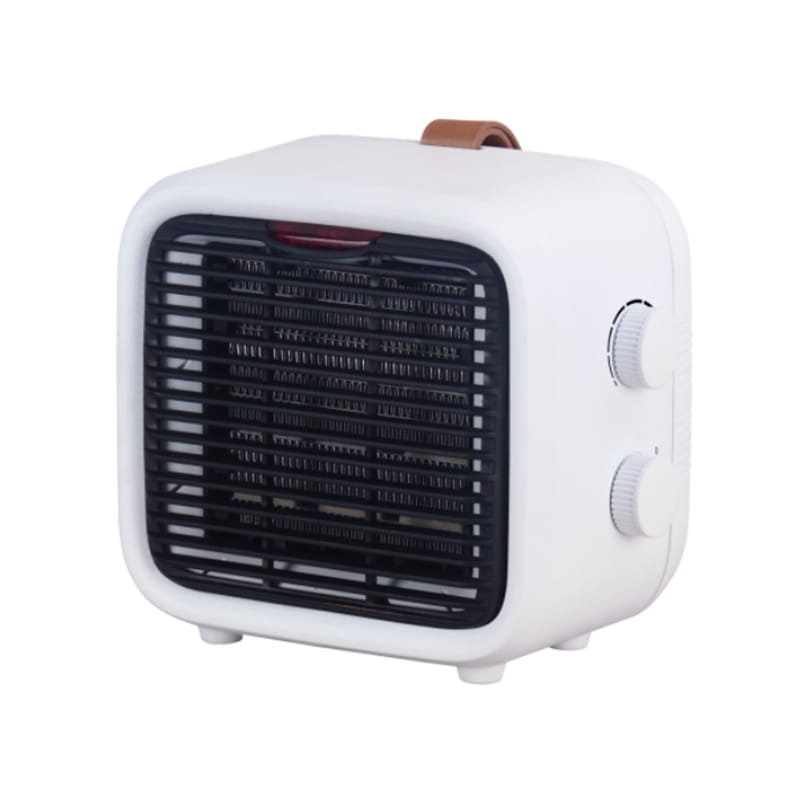 Personal Mini Electric Ceramic Fan Heater 1500W in WhiteCompact PTC ceramic heater with 1000/1500W settings, adjustable thermostat, timer, and safety cut-outs; suited to small, well-insulated rooms where a 1500W unit can cycle.View Product →
A 220 sq ft living room with 9-foot ceilings: it helps, but it will not hold the room
Adjust for volume and the effective area becomes roughly 248 square feet, needing about 7,400 BTU per hour — around 2,200 W. A 1,500 W unit takes the chill off the seating area if you sit within its throw, but the far end of the room stays cool. Treat it as a supplement.
A 400 sq ft uninsulated garage: no
At 50 BTU per square foot that space needs about 20,000 BTU per hour, or roughly 5,800 W. One 1,500 W heater raises the temperature a few degrees at best. Step up to a 3,000 W unit on a dedicated circuit, or accept that the space stays cold.
How a 1,500 W fan heater moves air through a room
A fan heater works best when the outlet faces open floor and the intake stays clear of fabric.
The circuit and the bill: what a 1,500 W heater really costs
A 1,500 W heater draws about 12.5 amps at 120 volts, close to the limit of a standard 15-amp bedroom circuit. Do not share that circuit with a vacuum, a microwave, or a second heater. If the breaker trips, it is reporting that the circuit is already loaded, not that the heater is faulty.
Running cost is arithmetic: kilowatts x hours x duty cycle. At 1.5 kW and 15 cents per kilowatt-hour, a full hour costs about 22 cents, and 24 hours of continuous operation costs about $5.40. In a 150 square foot insulated room the unit rarely runs nonstop once it reaches the setpoint — a 40 to 60 percent duty cycle works out to roughly $2.15 to $3.25 a day. Recalculate with your own rate; U.S. residential prices vary widely by state.
Daily energy use and cost at 15 cents per kWh
36 kWh
$5.40
$5.40
100% run time
21.6 kWh
$3.24
$3.24
60% duty cycle
14.4 kWh
$2.16
$2.16
40% duty cycle
Illustrative 24-hour figures. Duty cycle depends on room size, insulation and outdoor temperature.
Two habits cut that number: lower the setpoint a few degrees, and close the door. A heater holding 68 °F in one closed room will always beat the same heater chasing 72 °F across an open floor plan.
How to size a heater for your own room in four steps
- Measure the floor: length x width in feet.
- Adjust for ceiling height: multiply by 1.0 for 8 feet, 1.1 for 9 feet, 1.25 for 10 to 12 feet.
- Adjust for the building: multiply by 1.0 for a modern insulated room, 1.15 for an average older room, 1.3 for heavy glazing or poor insulation.
- Multiply by 30 BTU per square foot, then divide by 3.412 to convert the result to watts.
Worked example: a 12 x 14 foot room with a 9-foot ceiling and average insulation. 168 sq ft x 1.1 = 185; x 1.15 = 213; x 30 = 6,390 BTU per hour; divided by 3.412 = 1,873 W. A 1,500 W heater is about 20 percent short there, so the honest options are a 2,000 W unit, a second heater on a different circuit, or a lower setpoint. Rooms that land at or below 5,100 BTU do well on a single 1,500 W unit.
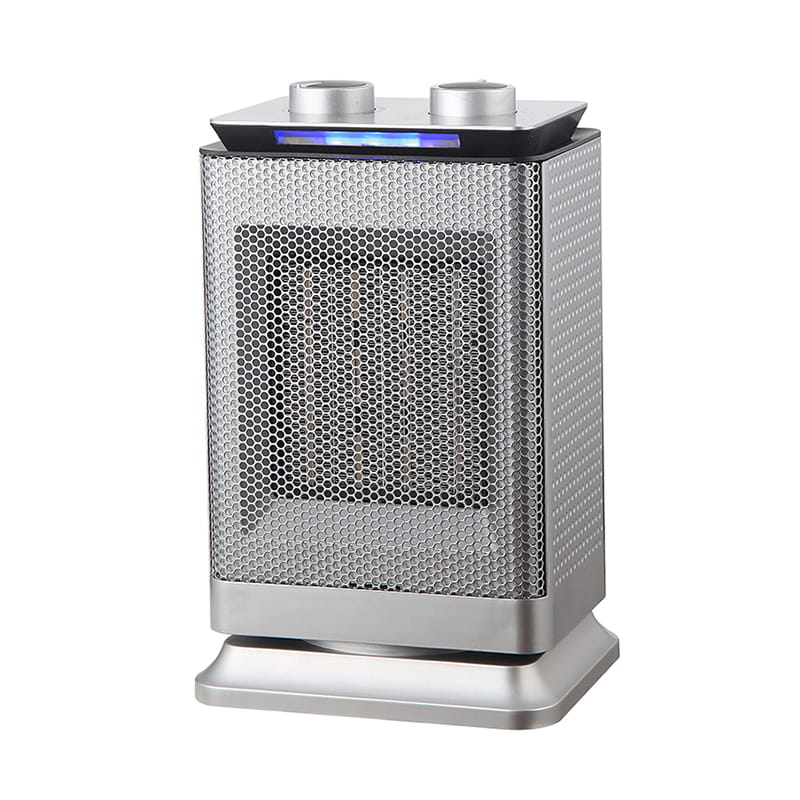 1500W Oscillating Portable Ceramic Fan Heater with LED LightPortable 1500W PTC ceramic heater with oscillation, adjustable thermostat, safety cut-offs, and LED indicator; L version adds timer, remote, and room-temperature display.View Product →
When a 1,500 W heater is the wrong tool
Step up or switch format when any of the following applies.
- The room exceeds about 200 square feet after adjustments.
- The ceiling is 10 feet or higher, or one wall is mostly glass.
- You need heat in two rooms at once from one outlet.
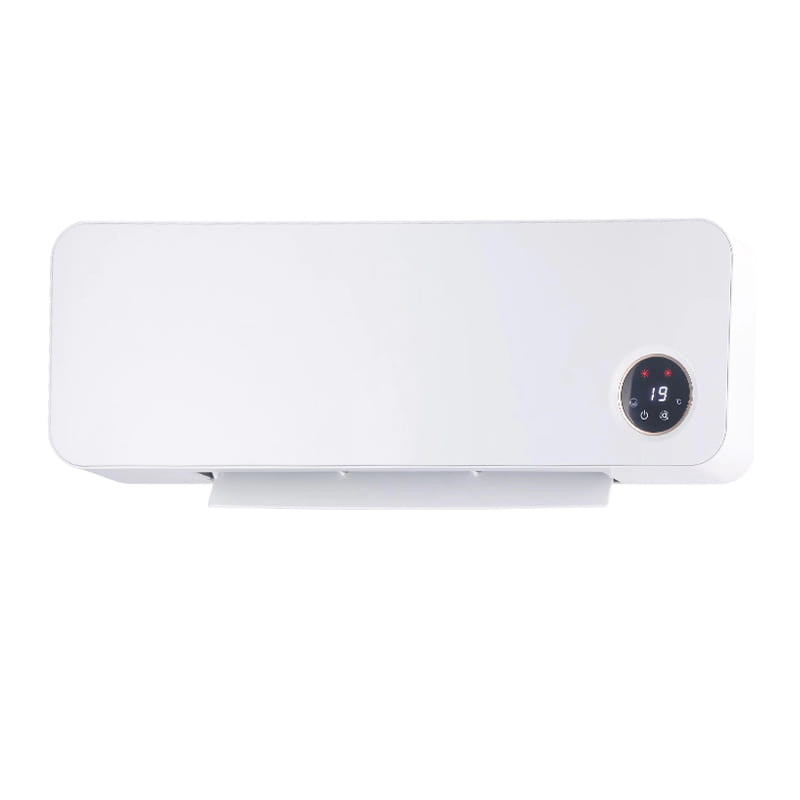
- You want the unit off the floor permanently. Wall-mounted PTC ceramic fan heaters keep the intake clear of curtains and bedding and release warm air where it mixes best.
- You plan to run it more than six hours a day all winter. A heat pump moves three to four units of heat per unit of electricity and usually wins on annual cost.
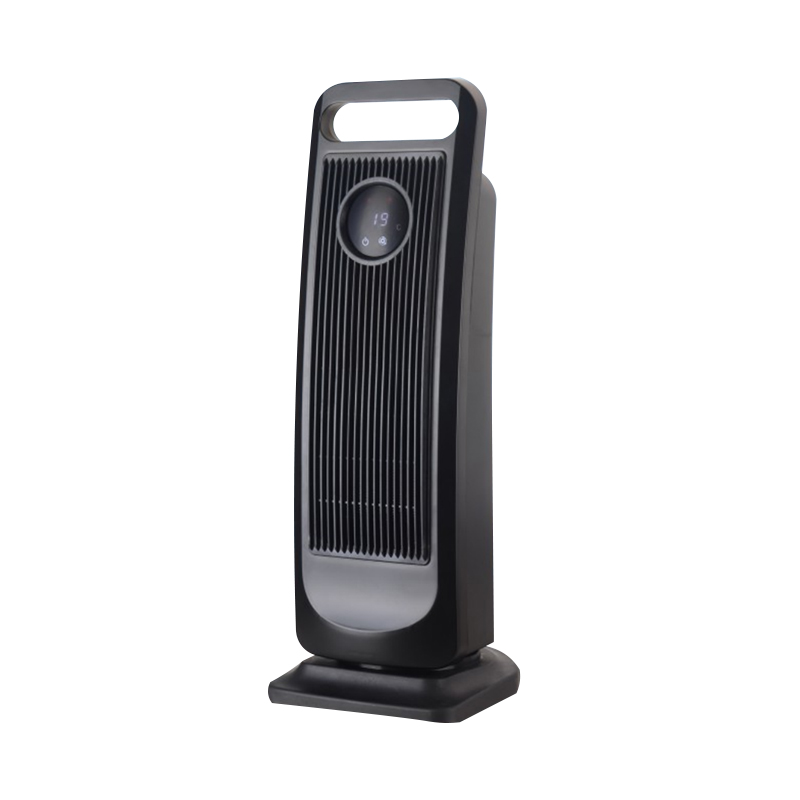
For floor-standing options across those formats, the PTC ceramic fan heater range covers portable, tower, fireplace-style and wall-mounted bodies built around the same ceramic element.
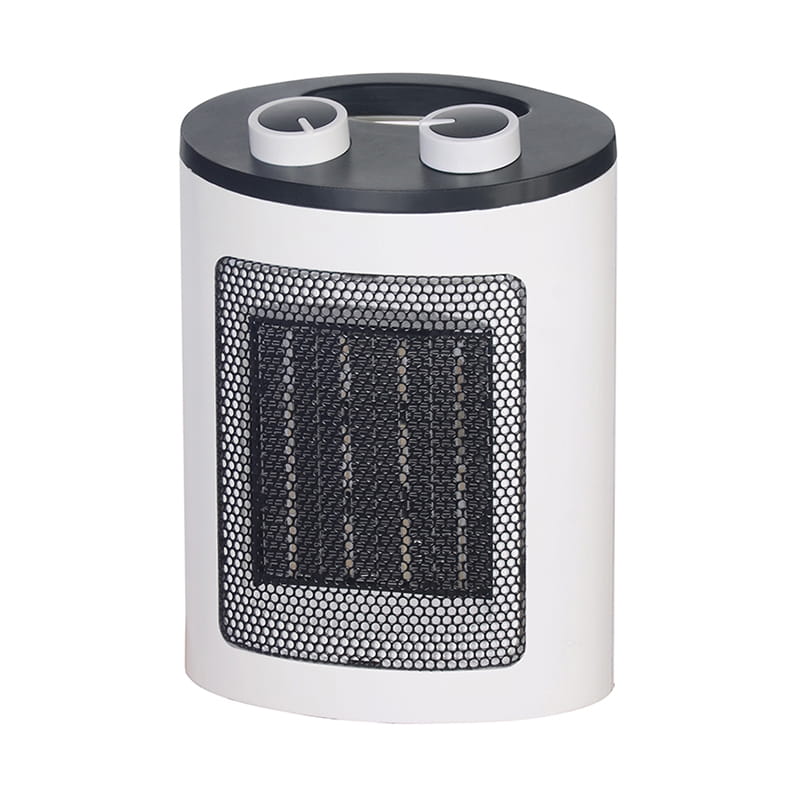 1500W Small Mechanical Control Portable Ceramic Fan HeaterCompact 1500W PTC ceramic heater with 1000/1500W settings, oscillation, adjustable thermostat, thermal cut-out, overheat protection, and carry handle; part of broader portable ceramic range.View Product →
Frequently asked questions
Q1. How many square feet will a 1500 watt heater heat?
About 150 square feet in an average insulated room with an 8-foot ceiling. A tight, well-insulated room in a mild climate can reach roughly 200 square feet; an older, drafty room may only hold 100 to 130.
Q2. Is a 1500 watt heater enough for a 200 square foot room?
Usually as a supplement, not as the only heat source. A 200 sq ft room with average insulation needs roughly 2,000 W. The area near the heater warms up; the far side of the room stays cooler.
Q3. How many BTU is a 1500 watt heater?
About 5,118 BTU per hour. One watt of electric resistance heat equals 3.412 BTU per hour, so 1,500 x 3.412 = 5,118. Every 1,500 W electric space heater delivers the same output.
Q4. Does a 1500 watt space heater use a lot of electricity?
It uses 1.5 kWh for every hour at full power — about 22 cents at 15 cents per kWh. Because heaters cycle, real use in a 150 sq ft room is often 40 to 60 percent of that.
Q5. Can I run a 1500 watt heater on a 15 amp circuit?
Yes in most cases: 1,500 W at 120 V draws about 12.5 amps. What you cannot do is share that circuit with another high-draw appliance. Add a second heater and the breaker will trip.
Q6. What size room will a 1500 watt space heater not heat?
Anything much above 250 square feet, or any uninsulated space such as a garage, porch or sunroom. Those rooms can need 20,000 BTU per hour or more, well beyond a 5,118 BTU unit.

-
Feedback
Related products




Copyright© Ningbo Shuaige Electric Appliance Co., Ltd. All Rights Reserved
