

 EN
EN  English
 Deutsch
 中文简体
中文简体 Author: Admin Date: 2026-10-07
How Many BTU Is 1500 Watts? Exact Heater Conversion and Room Sizing Guide
1500 watts equals 5,118 BTU per hour. The conversion is fixed: one watt of electric heating produces 3.412 BTU per hour, so 1,500 multiplied by 3.412 gives 5,118 BTU/hr. When a spec sheet rounds that to 5,000 BTU or 5,100 BTU, it is describing exactly the same rated output.
The arithmetic is the simple part. What usually goes wrong is the application: buyers treat BTU and BTU/hr as one unit, assume a 1500W heater will warm any room advertised as suitable for 1500 watts, and forget that the socket on the wall has a capacity limit of its own. The sections below cover the conversion, the realistic coverage of 5,118 BTU/hr, and the electrical checks worth making before you buy a single unit or import a container of PTC ceramic fan heaters.
Content
- 1 1500 Watts to BTU per Hour: The Conversion
- 2 BTU and BTU per Hour Are Not the Same Unit
- 3 What 5,118 BTU per Hour Actually Heats
- 4 Amps, Circuits and Plug Types: The Limit Behind the Wattage
- 5 Do PTC Ceramic Heaters Deliver More BTU Than Other Electric Heaters?
- 6 What to Check Before Ordering 1500 W Heaters in Bulk
- 7 Frequently Asked Questions: BTU, Watts and Space Heaters
1500 Watts to BTU per Hour: The Conversion
The formula works in both directions, which matters when you are comparing an electric heater against a gas, propane or kerosene appliance:
- BTU per hour = watts multiplied by 3.412
- Watts = BTU per hour divided by 3.412
3.412 is not a marketing figure. One watt-hour of electrical energy equals 3.412 BTU of thermal energy, and heating elements convert virtually all of the electricity they draw into heat. No manufacturer can squeeze more heat out of the same wattage: a 1500 W PTC ceramic heater and a 1500 W oil-filled radiator both deliver 5,118 BTU/hr. What changes between models is how quickly and how evenly that heat reaches the room.
Reading the numbers in reverse is just as useful. A 5,000 BTU/hr appliance is 1,466 watts, and a 10,000 BTU/hr appliance is 2,931 watts. It also explains why plug-in electric heaters cluster around 1,500 W — on a 120 V North American circuit, that is the practical maximum before a dedicated 20 A outlet is required.
Rated heat output: watts converted to BTU per hour
Bar length is proportional to BTU per hour, using 1 W = 3.412 BTU/hr.
| Heater wattage | BTU per hour | Amps at 120 V | Amps at 230 V | Electricity per hour |
|---|---|---|---|---|
| 600 W | 2,047 | 5.0 A | 2.6 A | 0.6 kWh |
| 1,000 W | 3,412 | 8.3 A | 4.3 A | 1.0 kWh |
| 1,500 W | 5,118 | 12.5 A | 6.5 A | 1.5 kWh |
| 1,800 W | 6,142 | 15.0 A | 7.8 A | 1.8 kWh |
| 2,000 W | 6,824 | 16.7 A | 8.7 A | 2.0 kWh |
| 3,000 W | 10,236 | 25.0 A | 13.0 A | 3.0 kWh |
BTU and BTU per Hour Are Not the Same Unit
A BTU is a quantity of energy: the heat needed to raise one pound of water by one degree Fahrenheit. BTU/hr is a rate of power, the same kind of measurement as a watt. The two are easy to confuse because a 1500 W heater running for exactly one hour releases 5,118 BTU of heat energy while its output rate is 5,118 BTU/hr. Leave it running for three hours and the energy delivered is 15,354 BTU, while the rate stays at 5,118 BTU/hr.
The distinction matters whenever an electric heater is compared with fuel-burning equipment, since those products are normally rated by energy input. One therm of natural gas is about 100,000 BTU, one gallon of propane about 91,500 BTU, and one gallon of kerosene roughly 120,000 BTU. Against a single therm, a 1500 W heater supplies about 5% of that heat in an hour of running.
Cost is where the units earn their keep. At an electricity price of about 16 cents per kWh, close to the U.S. residential average published by the Energy Information Administration, one hour of 1500 W heating costs roughly 24 cents and delivers 5,118 BTU. Where gas is inexpensive, the same heat from a high-efficiency furnace costs considerably less — which is why electric space heaters work best as zonal heat for one occupied room rather than as a whole-house solution.
What 5,118 BTU per Hour Actually Heats
The common sizing rule for portable electric heating is 10 watts per square foot of floor area, which is the same as roughly 34 BTU/hr per square foot. On that basis, 5,118 BTU/hr suits about 150 square feet: a bedroom, a home office, a study or a bathroom.
That estimate assumes an 8-foot ceiling, average insulation and a moderate winter. In a colder climate, an older house, or a room with large single-glazed windows, the same heater may hold only 100 to 120 square feet at a comfortable temperature. The heater's output does not drop when the weather turns; the room's heat loss rises, so the temperature it can maintain falls.
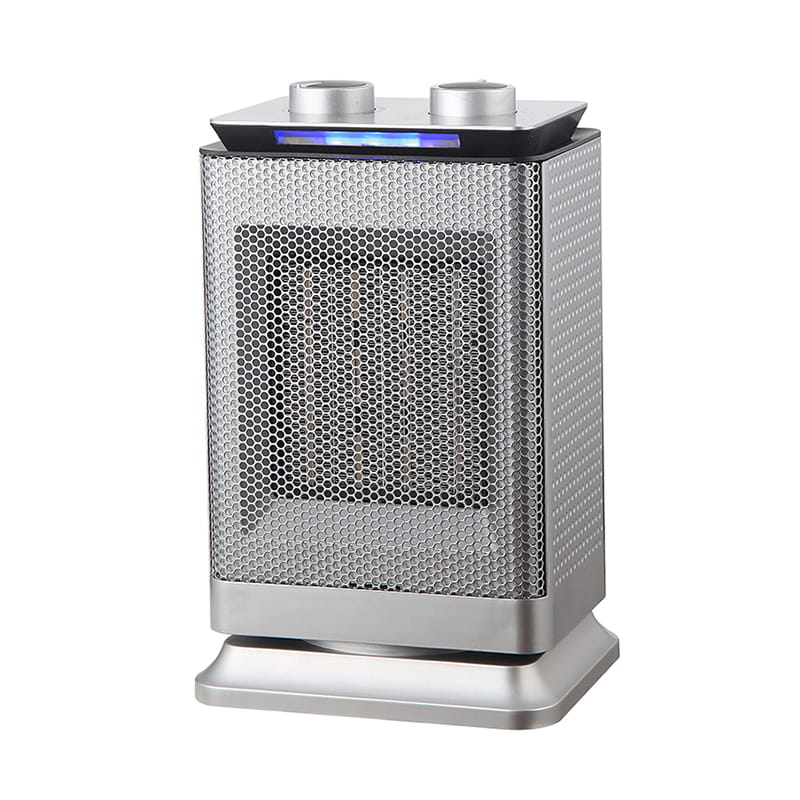 1500W Oscillating Space Ceramic Heater With LED LightThis heater features rapid heating, temperature adjustment, and safety protection functions. The top is equipped with an indicator light for clear visibility of its op...View Product →
Two practical consequences follow. First, a 1500 W heater in a 300 square foot open-plan living room will run continuously and still leave the far corner cold — the answer is a second unit or a higher-output model, not a more expensive 1500 W design. Second, the features that spread heat matter more than claims about the element: oscillation, a wider grille, and a thermostat that reads room air rather than the air leaving the grille.
Heating capacity needed by room size (10 W per square foot)
Assumes 8 ft ceilings, average insulation and a moderate climate; cold or drafty rooms can need 30% to 50% more capacity.
Amps, Circuits and Plug Types: The Limit Behind the Wattage
Wattage also decides which circuit a heater can use, and this is the part of the calculation that trips breakers and blows fuses.
At 120 V, 1500 W draws 12.5 A. A standard North American 15 A branch circuit can carry it, but only if nothing else significant is running on that line — a vacuum cleaner or a hair dryer on the same circuit will push it over. 1800 W units draw 15 A and generally call for a 20 A circuit. In Europe and much of Asia, where mains voltage is 220 to 240 V, the same 1500 W pulls only 6.5 A, so circuit capacity is rarely the limiting factor.
For anyone specifying heaters for resale, the electrical details belong on the checklist next to the BTU figure: plug type, cord length and gauge, thermostat type, tip-over switch, thermal cut-out, and certification such as CE, GS or ETL. A 1500 W heater with the right element but the wrong plug standard is unsellable in the target market, and how a 1500 W mechanical-control heater manages overheat protection is a useful reference for what those safety systems actually do.
Do PTC Ceramic Heaters Deliver More BTU Than Other Electric Heaters?
No. Any electric heater rated at 1500 W produces 5,118 BTU/hr, because the conversion from electricity to heat is close to lossless in every resistive design. The real difference between a PTC ceramic fan heater and other electric heaters is behaviour, not output.
A PTC (positive temperature coefficient) ceramic element increases its resistance as it warms up, which self-limits its surface temperature and reduces the risk of the element glowing or scorching dust. Combined with forced airflow, that produces faster warm-up, steadier output and a lower surface temperature than a wire-element heater of identical wattage. In room terms, the gains are comfort and safety margins rather than extra BTU.
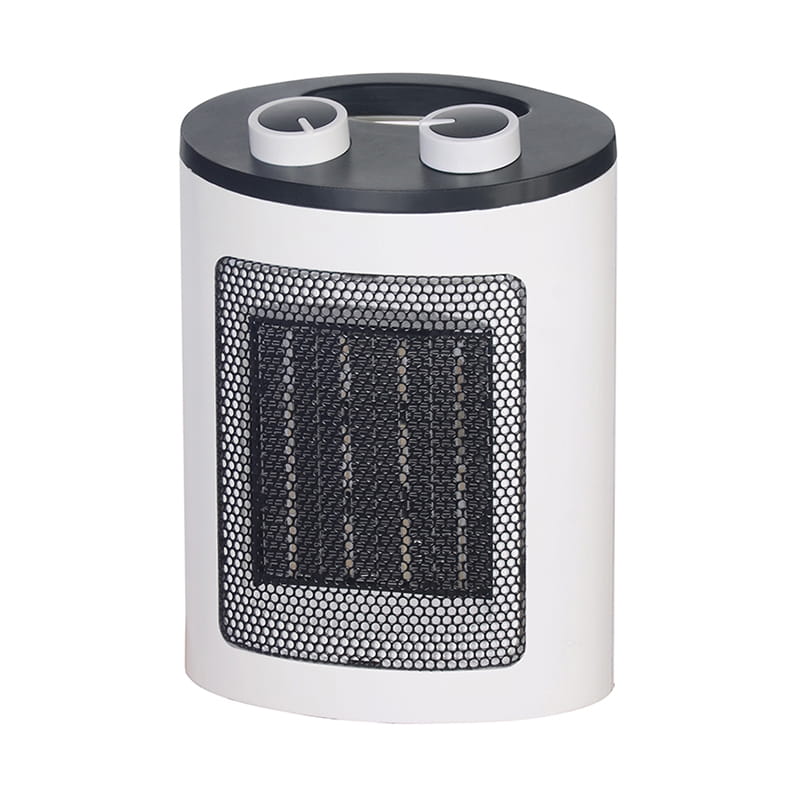 1500W Samll Size Mechanical Control Home HeaterIt is very efficient at generating heat. It can be adjusted to different heat settings. When the setting temperature is reached, the heater will be shut off automatica...View Product →
Isometric view: how a 1500 W fan heater turns electricity into 5,118 BTU/hr
Schematic illustration; proportions and internal layout are simplified.
For comparison, a heat pump moves heat instead of generating it, with a coefficient of performance of 3 to 4. A 1500 W input there can move the equivalent of 15,000 BTU/hr or more into a room. That is a genuine efficiency advantage, and it is why electric resistance heaters make sense as zonal or supplementary heat rather than as a whole-house heating strategy.
What to Check Before Ordering 1500 W Heaters in Bulk
Once the question shifts from one heater to a container load, the BTU conversion becomes a specification line rather than a decision: 1500 W is 5,118 BTU/hr, and most markets expect both numbers on the box. The variables worth evaluating instead are:
- Voltage and plug standard for the destination market, since the same model is built in 120 V and 220 to 240 V versions
- Control type — mechanical rotary, digital with LED display, or remote — and how accurately the thermostat tracks room temperature
- Certification and test documentation for overheat protection, tip-over shut-off and electrical safety
- Airflow design: grille size, oscillation angle and noise level, which decide whether the 5,118 BTU/hr is felt across the room or only near the unit
- Sample terms, production lead time and packaging quality, which determine landed cost more often than the unit price does
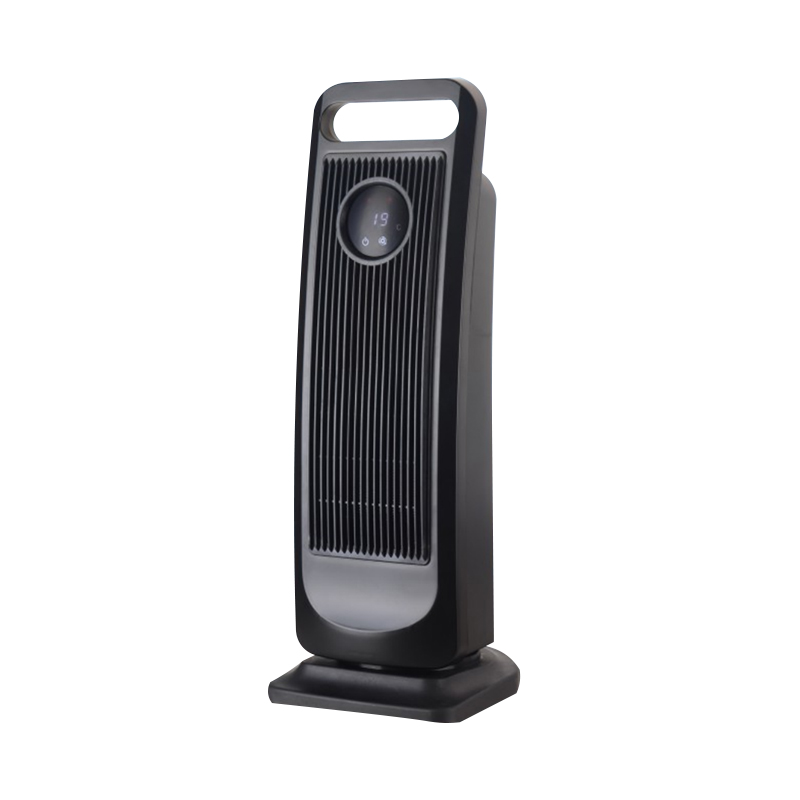
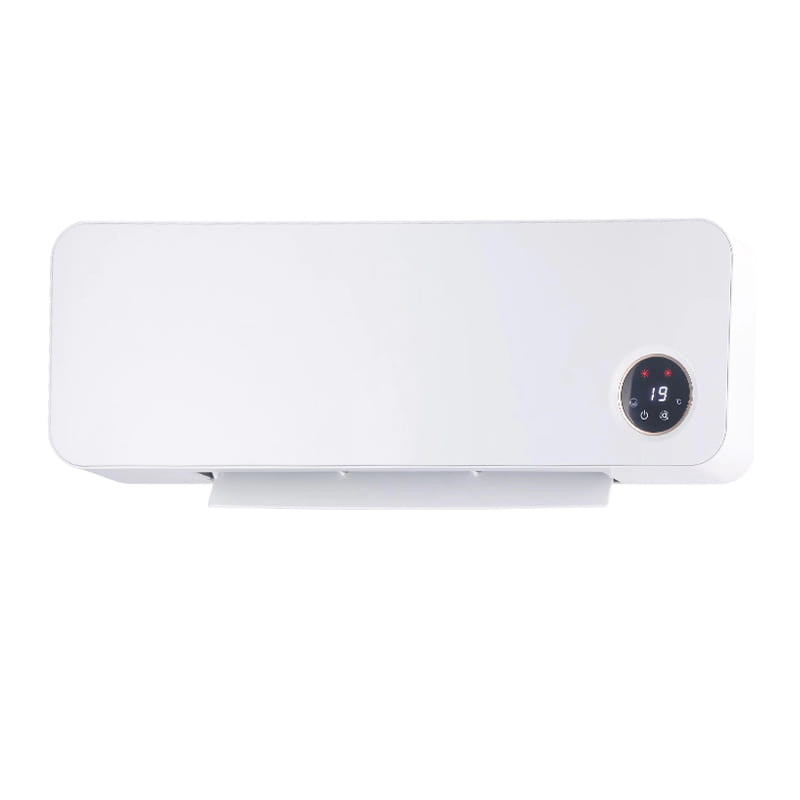
As a PTC fan heater manufacturer in Ningbo with more than 15 years of production experience, we build 1500 W models in portable, tower and wall-mounted formats, and the same 5,118 BTU/hr figure applies to each of them at the rated voltage. Buyers who need more output step up to 1800 W or 2000 W units, or specify two heaters for a divided space.
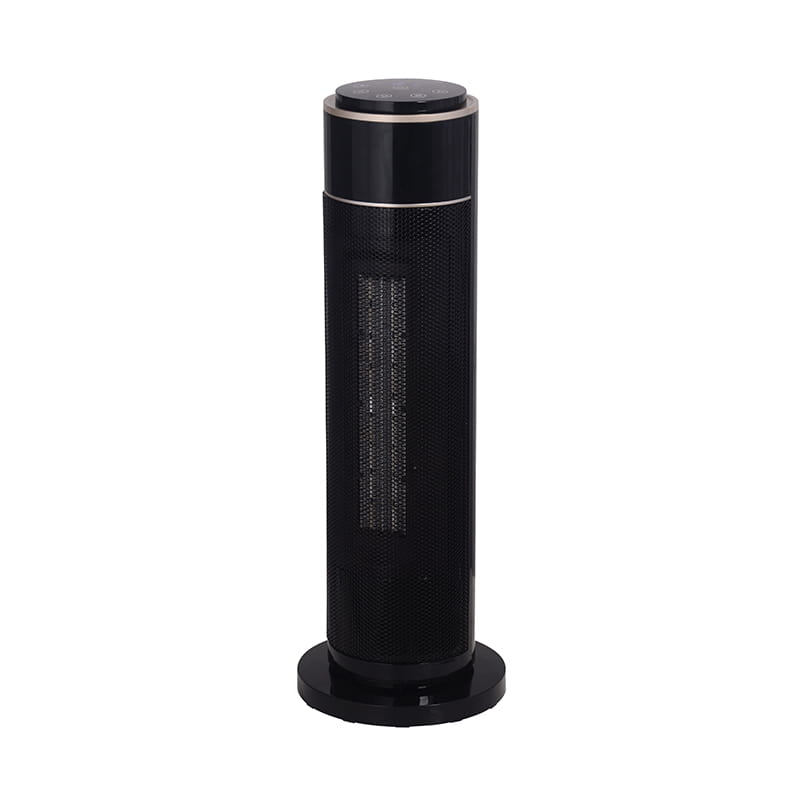 Room Space Heater PTC Heatig ElementEfficient Heat Delivery: Ceramic heaters use advanced ceramic materials to generate uniform heat, ensuring a consistent and even distribution of warmth. This type of h...View Product →
Frequently Asked Questions: BTU, Watts and Space Heaters
Q1. How many BTU is 1500 watts?
1500 watts equals 5,118 BTU per hour, calculated as 1,500 × 3.412. Sellers often round this to 5,000 or 5,100 BTU/hr on the packaging.
Q2. Is 1,500 watts the same as 5,000 BTU?
In practice, yes. A 5,000 BTU/hr heater is 1,466 watts, so the difference from a true 1500 W unit is only about 2%.
Q3. What size room will a 1500 watt heater heat?
About 150 square feet at 10 watts per square foot, and 100 to 120 square feet in cold climates or poorly insulated rooms.
Q4. How many BTU per hour do I need per square foot?
For electric space heating, plan on 30 to 40 BTU/hr per square foot, which matches the 10 W per square foot rule of thumb.
Q5. Can a 1500 watt heater run on a 15 amp circuit?
Yes at 120 V, where it draws 12.5 A, provided the circuit is not carrying other heavy loads. A dedicated 20 A circuit is a safer choice.
Q6. How much does it cost to run a 1500 watt heater?
It uses 1.5 kWh per hour, so roughly 24 cents an hour at 16 cents per kWh, or about 45 cents an hour where electricity costs 30 cents per kWh.

-
Feedback
Related products




Copyright© Ningbo Shuaige Electric Appliance Co., Ltd. All Rights Reserved
