

 EN
EN  English
 Deutsch
 中文简体
中文简体 Author: Admin Date: 2026-09-30
How Does a Space Heater Work? PTC Element, Airflow and Safety Explained
A 1,500 W space heater plugged into a normal 15 A household circuit pulls roughly 12.5 A, which is already at the continuous limit that circuit is designed to carry. That single number explains most of how a space heater works: it turns electricity into heat at a fixed rate, then uses a fan to push that heat into the room. Everything else inside the housing, from the ceramic element to the tip-over switch, exists to control that conversion and stop it from becoming a hazard.
The sections below follow the working principle stage by stage, from the moment current meets the PTC element to the point where warm air reaches your feet, and explain what each stage means for running cost, room size and safety.
Content
- 1 How a Space Heater Works: The Short Answer
- 2 Inside the Housing: What Each Part Does
- 3 Why PTC Ceramic Behaves Differently From a Wire Coil
- 4 How the Heat Actually Reaches the Rest of the Room
- 5 What a Space Heater Costs to Run
- 6 The Safety Chain, and Why Your Breaker Is Part of It
- 7 Matching the Heater Type to the Room
- 8 When a Heater Stops Feeling Warm
- 9 Frequently Asked Questions
- 9.1 Do ceramic space heaters use a lot of electricity?
- 9.2 How long does a space heater take to warm a room?
- 9.3 Can I leave a space heater on all night?
- 9.4 How many amps does a 1500W space heater draw?
- 9.5 Why does a new space heater smell when first switched on?
- 9.6 Does a space heater dry out the air?
How a Space Heater Works: The Short Answer
An electric space heater does three things in sequence: it makes heat, it moves heat, and it regulates heat. There is no flame, no fuel and no exhaust, which is why these units need no venting and can be carried from room to room.
- Make heat. Current passes through a resistive element, and that resistance converts electrical energy into heat. A 1,500 W heater releases close to 5,100 BTU per hour, because one watt equals about 3.41 BTU per hour.
- Move heat. A blower draws cool air through the rear intake and forces it across the hot element. Air leaves the outlet grille well above room temperature and mixes with the cooler air already in the room.
- Regulate heat. A thermostat samples the incoming air and switches the element on and off to hold the set temperature, so the unit is not drawing full power every minute it is switched on.
That is the entire machine. The differences between models, whether the element is ceramic or wire, whether the housing is flat or a tower, whether control is a mechanical dial or a digital sensor, are variations on those three steps.
Inside the Housing: What Each Part Does
Take the shell off a PTC fan heater and you find a short list of parts. Each one maps to a stage of the working principle, and each one has a characteristic failure mode that shows up after a few seasons of use.
| Part | Role in the working principle | Typical symptom when it fails |
|---|---|---|
| PTC ceramic element | Self-limiting resistor that converts current into heat; resistance climbs steeply above its Curie temperature | Fan runs but the air stays cool; element cracks after a hard knock |
| Blower fan | Draws air across the element and out through the outlet grille | Weak airflow, rattling noise, smell of hot dust |
| Thermostat | Cycles the element to hold the set temperature | Room overheats or never reaches the set point |
| Thermal cut-out | Resettable or one-time fuse that opens when internal temperature exceeds a safe limit | Heater will not power on at all |
| Tip-over switch | Cuts power once the unit tilts past a set angle | Heater only works when held upright |
| Housing and grille | Keeps fingers, fabric and dust away from live parts and hot surfaces | Deformed grille, discoloured plastic |
Why PTC Ceramic Behaves Differently From a Wire Coil
Most heaters sold today use a PTC (positive temperature coefficient) element made from doped barium titanate. Its resistance is low when cold and rises sharply once the element passes a designed Curie point, usually somewhere between 120 °C and 180 °C depending on the formulation. In materials literature on barium titanate ceramics, resistance is described as climbing by orders of magnitude across that transition, which is what makes the element self-limiting: the hotter it gets, the less current it draws.
A bare nichrome coil has no such brake. It keeps converting current into heat until the thermostat or the thermal cut-out intervenes, which places the entire safety burden on the control circuit rather than on the material itself. That is the main reason ceramic elements became the standard choice for heaters meant to run for hours in homes with children or pets.
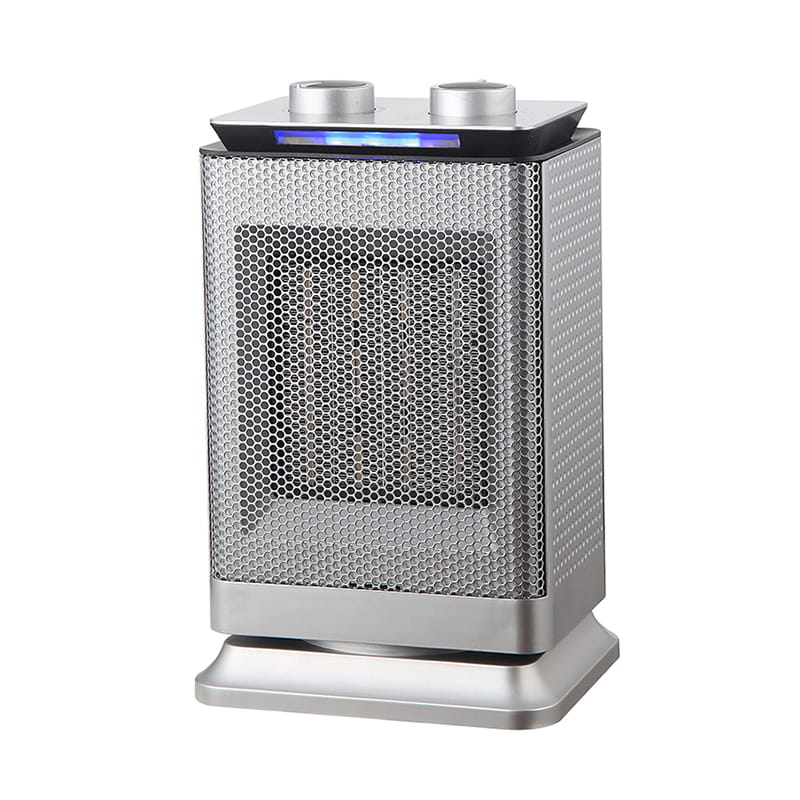
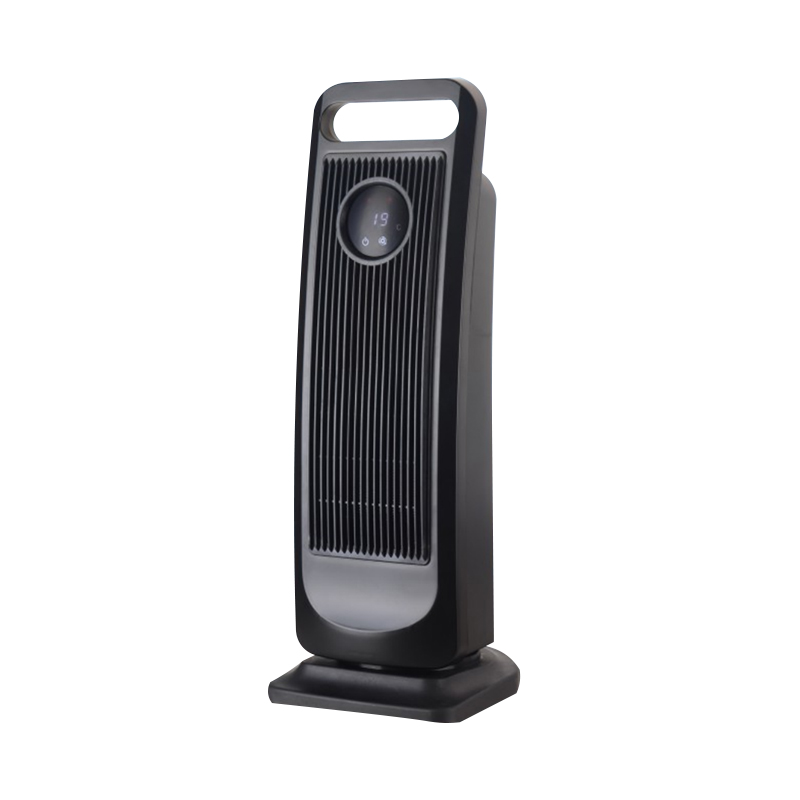
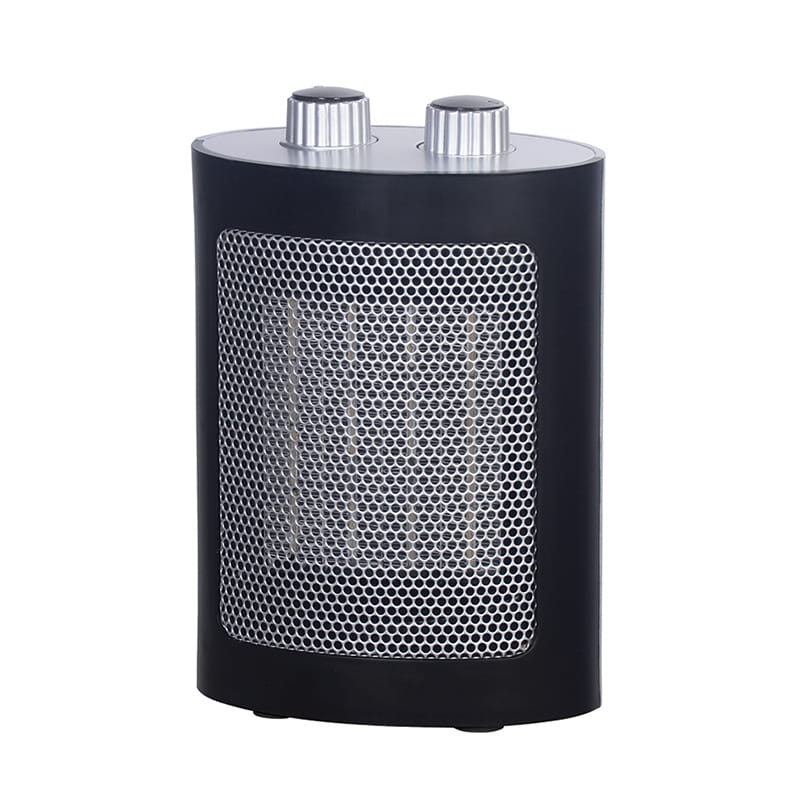 Quick And Quiet Fast Heating Fan HeaterEquipped with a PTC ceramic heating element, this heater ensures rapid heating. It features two heat settings at 1000W and 1500W. Its compact size allows for easy mobi...View Product →
How the Heat Actually Reaches the Rest of the Room
Watts set the ceiling on heat output; airflow decides how quickly anyone notices it. Warm air leaves the grille through forced convection, rises toward the ceiling, and gradually pushes cooler air down and back toward the intake. That loop is why a 1,200 W unit with a well-shaped duct and oscillation often feels stronger than a 1,500 W unit with a narrow throw.
Placement changes the result more than the specification sheet does. A heater standing on the floor near the coldest wall lets the warm plume rise across the room; the same unit tucked behind a sofa or pressed against a curtain starves the intake, shortens the air path and can trip the thermal cut-out. Oscillation widens the throw pattern and reduces the hot spot directly in front of the grille, but it does not add heat.
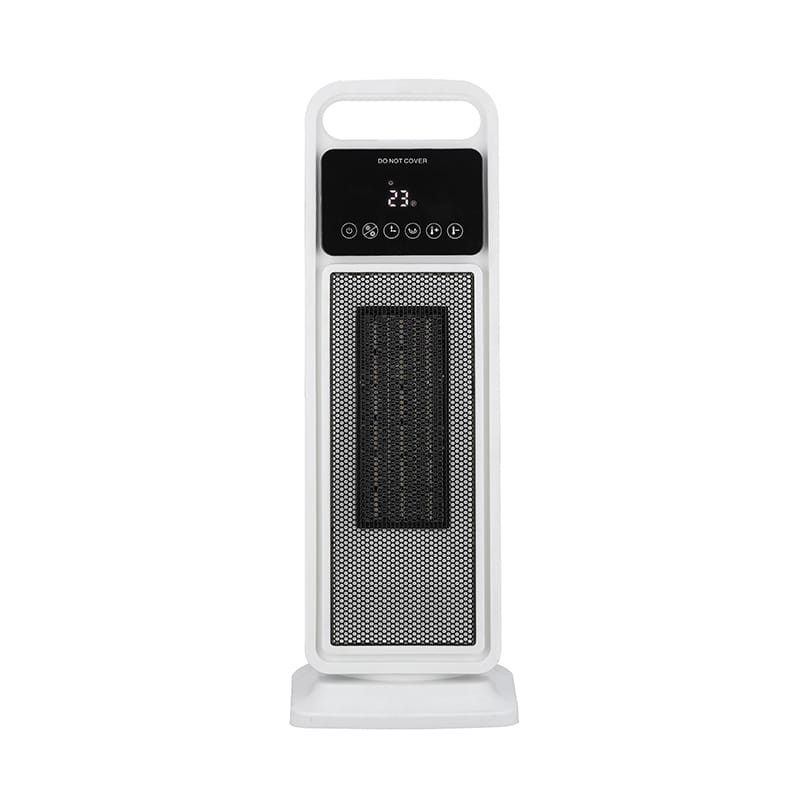 Oscillating Ceramic Tower Electric Space Heater With RemoteEnergy Efficient: Ceramic heaters are highly energy efficient, consuming significantly less energy compared to other heating methods. It's designed to operate at a mor...View Product →
What a Space Heater Costs to Run
Resistance heating is close to 100% efficient at the point of use, but that does not make it cheap. At the U.S. average residential price of about 16 cents per kilowatt-hour reported by the U.S. Energy Information Administration for 2024, every 1,000 W of continuous draw costs roughly 16 cents per hour.
Those figures are the ceiling, not the bill. Once the thermostat is satisfied, the element switches off, so the average draw across an evening sits below the nameplate wattage. If you want the detail behind that cycling behaviour, this note on ceramic heater power consumption explains why measured use tends to land under the rated figure.
The Safety Chain, and Why Your Breaker Is Part of It
Four devices stand between a working heater and a dangerous one. The thermostat holds the room temperature, the thermal cut-out opens the circuit if internal temperature keeps rising, the tip-over switch kills power when the unit tilts, and the housing keeps hands and fabric away from live parts. Any one of them alone is not enough.
The circuit belongs in that chain too. Electrical codes expect a 15 A branch circuit to carry no more than 80% of its rating continuously, which works out at 12 A. A 1,500 W heater at 120 V draws 12.5 A, so it should share the circuit with nothing else. An 1,800 W model reaches 15 A and needs a 20 A circuit, while 3,000 W units are built for 240 V, where the same power draws about 12.5 A. Plugging any of them into an extension lead rated below the load is the most common avoidable mistake.
Matching the Heater Type to the Room
The type name describes the shape of the air path, not the quality of the heater. Power, throw and placement matter far more than whether the housing is tall or flat.
| Type | How it moves air | Typical power | Where it fits |
|---|---|---|---|
| Portable ceramic fan heater | Axial or blower fan with a fixed or oscillating outlet | 600 to 1,500 W | Desks, bedrooms, small offices, personal use |
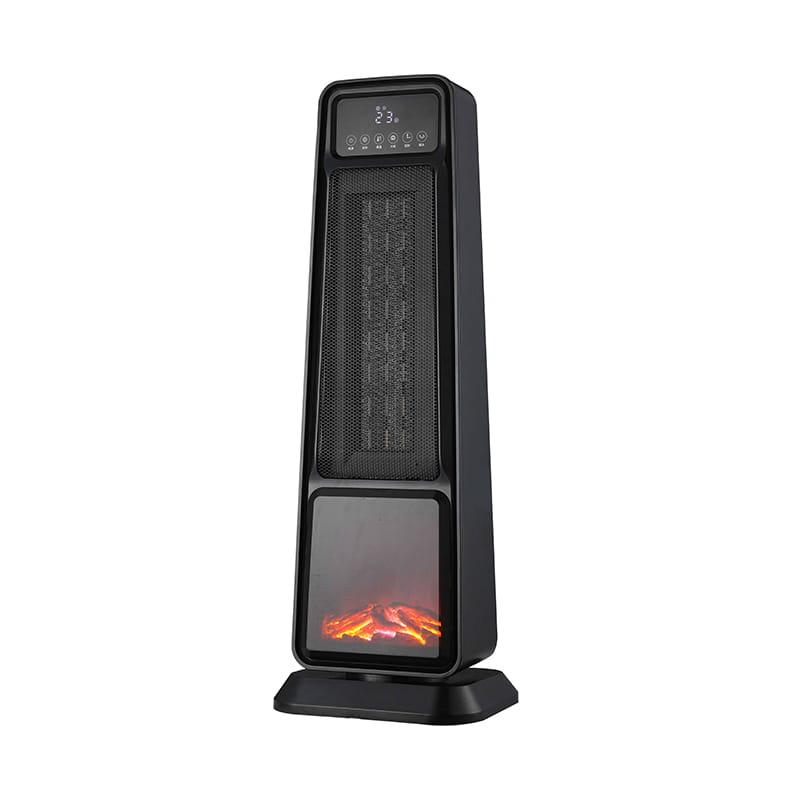
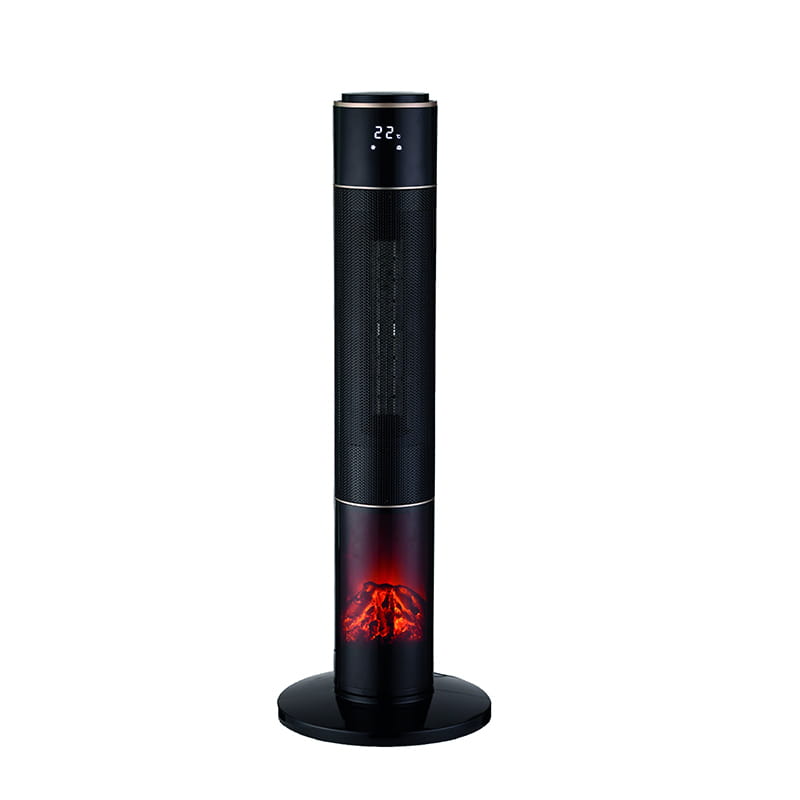
| Tower ceramic fan heater | Tall vertical duct, wide oscillation arc, remote control on many models | 1,500 to 2,200 W | Living rooms and corners where floor space is shared |
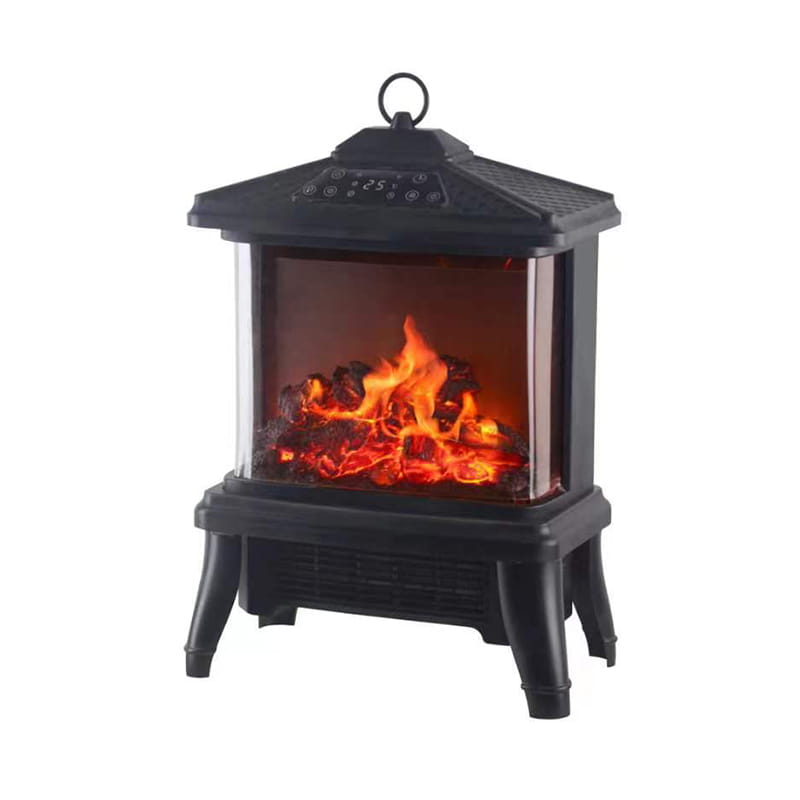
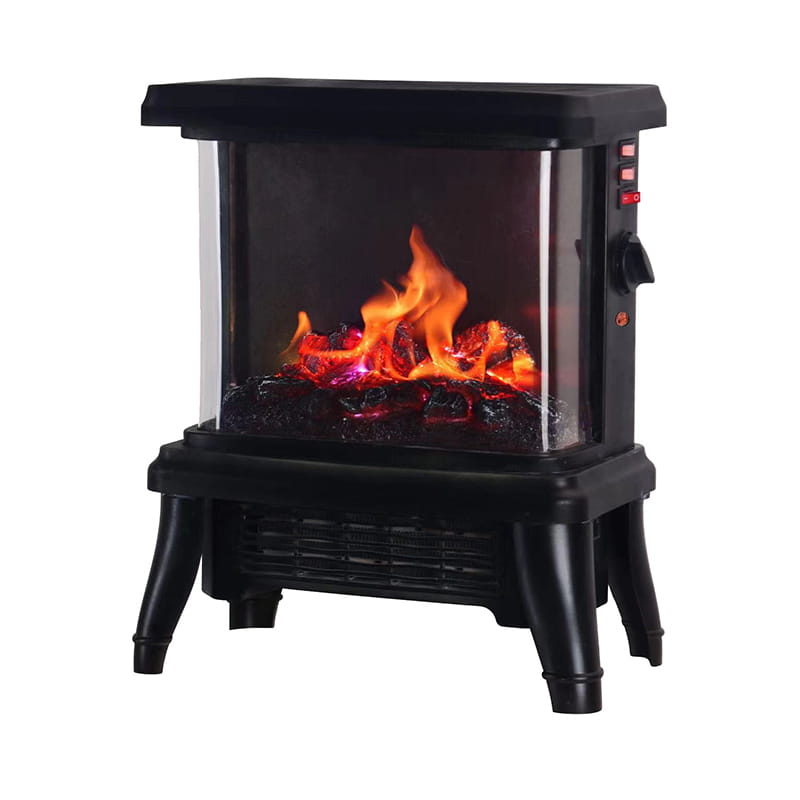
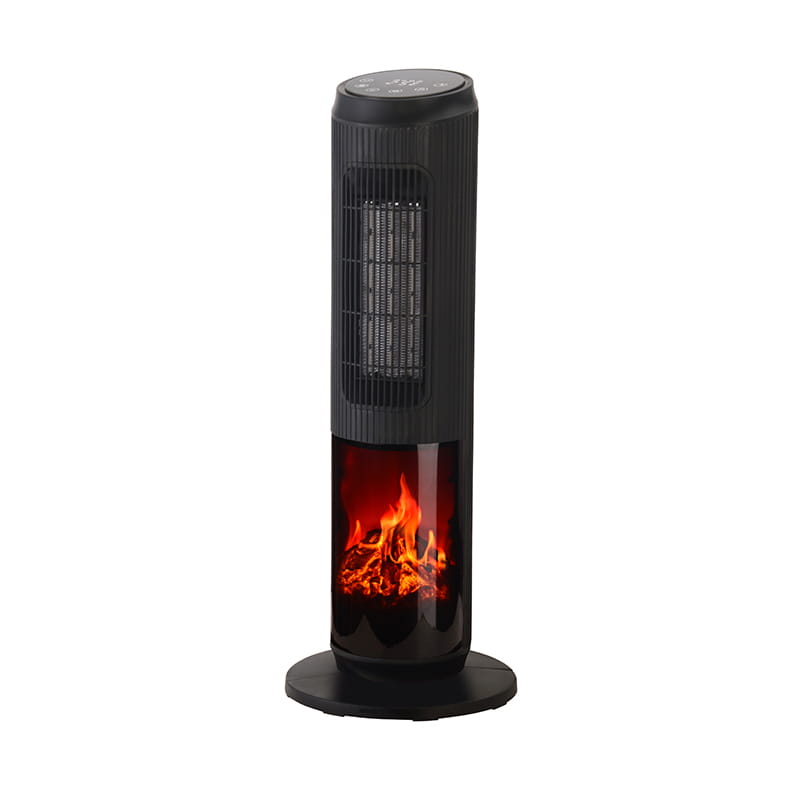
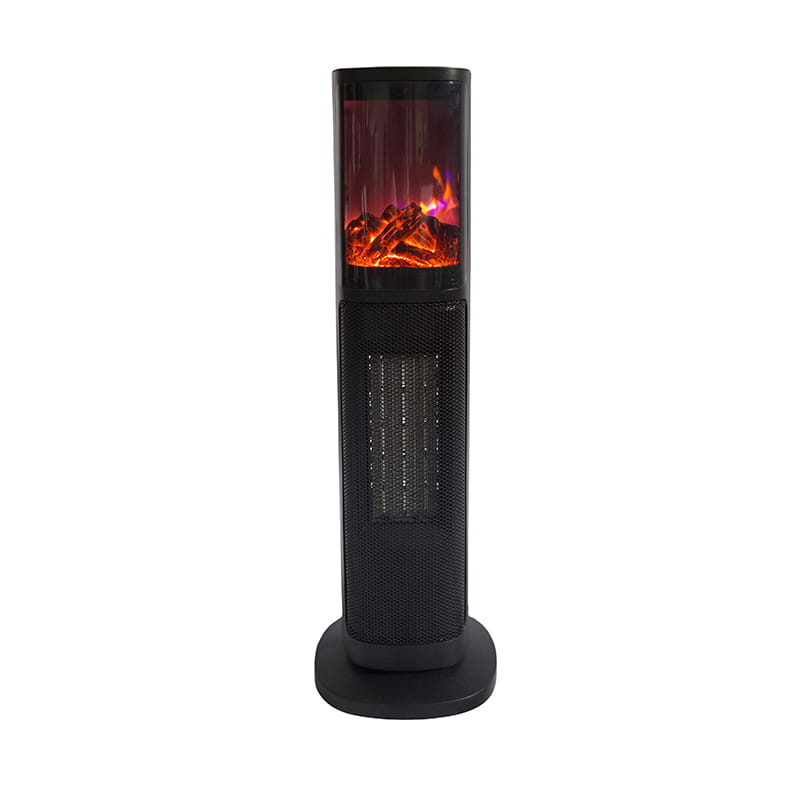
| Tower fireplace heater | Same air path, with an LED flame screen in front of the element | 2,000 to 2,200 W | Rooms where the unit is also part of the decor |
| Wall-mounted ceramic heater | Fixed duct that throws air along the wall or downward | 1,000 to 2,000 W | Bathrooms, hallways and workshops with no free floor space |
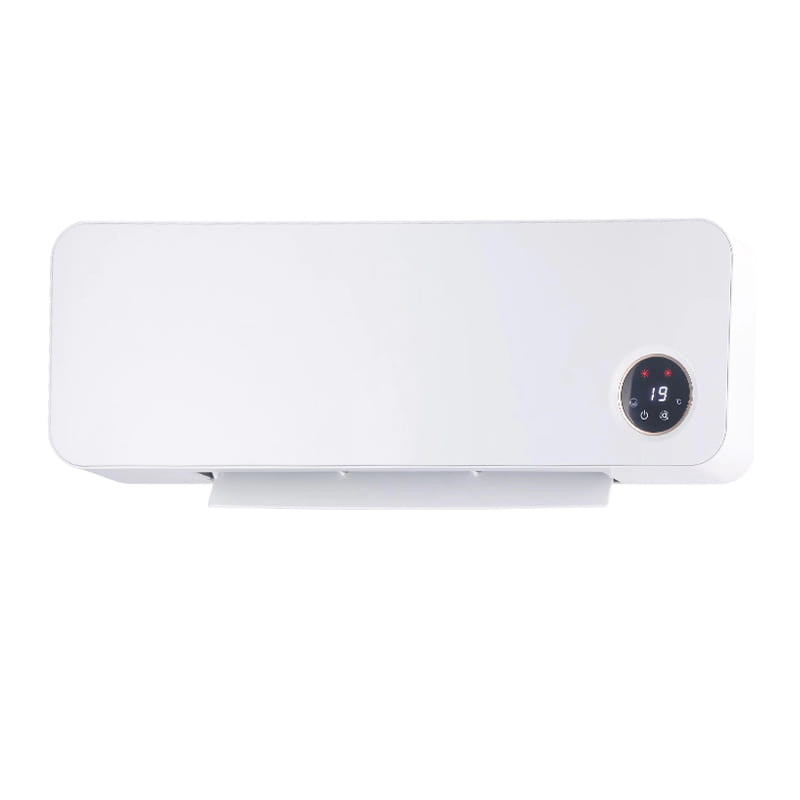
A wall-mounted unit removes the trip hazard and the argument about where the heater should stand, which is why the format is common in bathrooms and hallways where floor space is fixed.
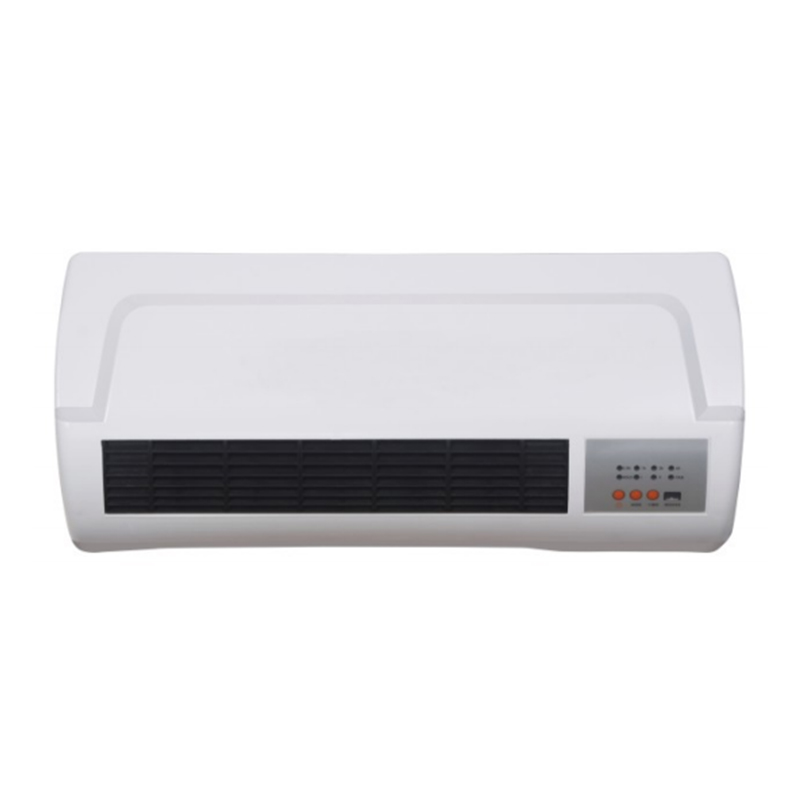 Fast Heating Intelligent Wall-Mounted/Desktop Dual-Purpose HeaterThe heater can rapidly heat up and features red indicator lights to signal the heating mode. It also boasts a timer function of up to 7.5 hours, offering flexibility f...View Product →
When a Heater Stops Feeling Warm
A heater that once warmed a room in ten minutes and now needs thirty is usually not failing electrically. Three causes cover most cases: a dusty intake grille, a clogged filter screen behind the rear panel, or a thermostat sensor sitting in a cold draught near a window. Clearing the intake and screen restores airflow and, with it, most of the original performance. If the unit shuts down and will not restart, the thermal cut-out has probably done its job, and the cause of the overheat needs to be found before the cut-out is reset.
For buyers sourcing in volume, the same three variables decide how many units come back as returns: element quality, airflow design and the safety chain. Those are the three things built into every platform at our PTC fan heater factory in Ningbo, which is why we can quote the same specification across a full model matrix.
Frequently Asked Questions
Do ceramic space heaters use a lot of electricity?
A 1,500 W ceramic heater uses 1.5 kWh for every hour at full output, roughly $0.24 at 16 cents per kWh. Because the thermostat cycles the element, real consumption is usually lower than the rated maximum.
How long does a space heater take to warm a room?
The PTC element reaches its working temperature within a few seconds, but the room warms far more slowly. A small, closed bedroom typically takes 10 to 20 minutes, and insulation plus outdoor temperature change that figure considerably.
Can I leave a space heater on all night?
Only a unit with a thermostat, a tip-over switch and a thermal cut-out, and only on a circuit that is not shared with other high-draw appliances. Keep bedding and curtains at least a metre from the grille.
How many amps does a 1500W space heater draw?
About 12.5 A on a 120 V circuit, since 1,500 divided by 120 equals 12.5. That is right at the 80% continuous limit of a 15 A breaker, so the heater should be the only load on that circuit.
Why does a new space heater smell when first switched on?
A light smell for the first few minutes is usually protective oil or dust burning off the element and housing. If the smell persists or resembles hot plastic, switch the unit off and check the intake for obstruction.
Does a space heater dry out the air?
It lowers relative humidity because warm air holds more moisture, not because the heater removes water from the room. The effect is the same as with any heating system, and a hygrometer reading will confirm it.
Once you know that a space heater is a resistor, a fan and a control loop working together, every specification sheet becomes easier to read. Watts tell you the ceiling on heat output, the element type tells you how the unit behaves once it is hot, and the safety chain tells you what happens when something goes wrong. Match the wattage to the circuit and the airflow pattern to the room, and the heater will do exactly what the physics promises.

-
Feedback
Related products




Copyright© Ningbo Shuaige Electric Appliance Co., Ltd. All Rights Reserved
