

 EN
 English
 Deutsch
 中文简体
Author: Admin Date: 2026-11-25
Digital Tower Heater Buying Guide: PTC Ceramic Specs, Controls & OEM Sourcing
Line up three tower heaters in the same showroom and the display is the first thing a buyer notices, but it is rarely what decides the reorder. Two units rated at 1800 W can behave very differently in a 20 m² living room: one holds the setpoint with short, frequent corrections, while the other lets the room drift a few degrees before the thermostat cuts back in. That gap comes from the control loop, the thermistor placement and the fan curve, not from the badge on the front panel.
This guide is written for importers, brand owners and product managers who need to compare digital tower heaters on the details that survive a returns analysis: element grade, control architecture, wattage matched to airflow, safety compliance, and the manufacturing decisions that shape landed cost.
Content
- 1 What Digital Control Actually Adds to a Tower Heater
- 2 Why the PTC Ceramic Element Defines Real-World Performance
- 3 Wattage, Airflow, and Room Volume
- 4 Variants Worth Knowing: Two-in-One and Flame Effect Models
- 5 Inside the Unit: Components That Decide Reliability
- 6 Safety and Compliance Checks Before You Commit
- 7 OEM and ODM Sourcing: From Spec Sheet to Shipment
- 8 Frequently Asked Questions
- 8.1 What is the difference between a digital and a mechanical tower heater?
- 8.2 How many watts do I need for a bedroom or living room?
- 8.3 Is it safe to leave a digital tower heater running overnight?
- 8.4 Do ceramic tower heaters use a lot of electricity?
- 8.5 Can I order a digital tower heater with my own brand and voltage?
- 8.6 How should a digital tower heater be cleaned and maintained?
What Digital Control Actually Adds to a Tower Heater
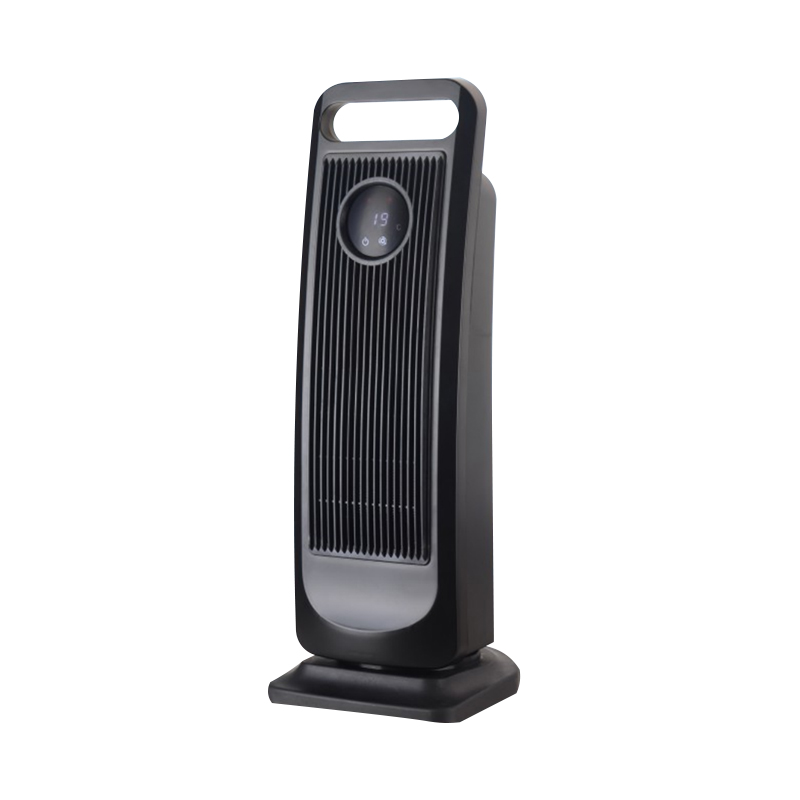
On a mechanical tower heater, a rotary knob bends a bimetal or capillary thermostat. The switching band is wide, often three to five degrees, so the room cycles between slightly cool and slightly warm. A digital model replaces that with an NTC thermistor feeding a microcontroller, which switches the element through a relay or triac at a tighter band and can add timed shut-off, memory after a power cut, child lock and infrared remote control.
For a private-label program, the difference shows up in three places: the specification sheet you publish, the after-sales profile, and the certification file. Digital boards introduce new failure modes, so board quality and sensor calibration deserve more attention than the number of icons on the panel.
| Feature | Mechanical control | Digital control |
|---|---|---|
| Temperature setting | Stepped rotary knob, no numeric readout | Numeric setpoint, commonly adjustable in 1 °C steps |
| Switching band | Wide, noticeable room swing | Narrower, more frequent short cycles |
| Timing | None, user switches off manually | Auto-off timer, often up to 24 hours |
| Remote and display | Indicator light only | IR receiver, LED or touch panel |
| Power recovery | Knob position retained | Memory function restores last setting |
| Cost and service profile | Lower BOM, fewer electronic failure points | Higher BOM, board and sensor quality determine reliability |
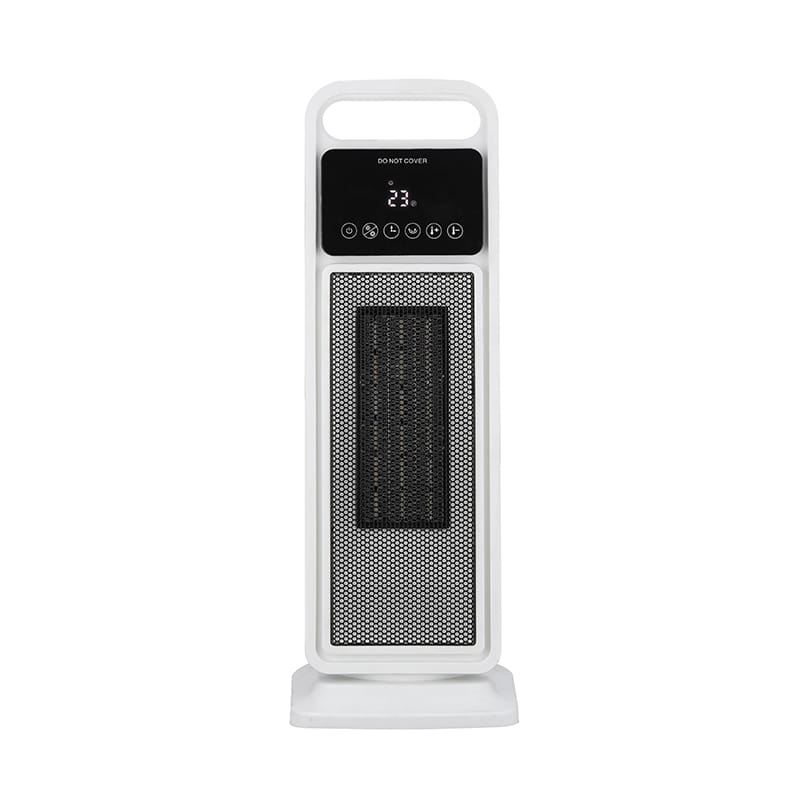 Oscillating Ceramic Tower Heater with Remote ControlA 2000W PTC ceramic tower heater with oscillation, remote, timer and thermostat control, relevant for private-label programs weighing board-level features and certification scope.View Product →
Oscillation and remote control are usually requested together, and both are board-level functions rather than add-on parts. That is why they affect tooling, certification scope and firmware validation more than the price difference between two SKUs suggests.
Why the PTC Ceramic Element Defines Real-World Performance
A positive temperature coefficient element is built from doped barium titanate ceramic. Its resistance rises steeply as it approaches the Curie point, so current falls away before the element can overheat. That self-limiting behaviour is why a PTC heater does not glow, why its surface temperature stays far below that of an open resistance wire, and why the element reaches working temperature within seconds instead of tens of seconds.
Element geometry matters as much as the material. Corrugated or honeycomb structures expose more surface area to the airflow, which lowers face temperature and improves heat transfer per watt. The element rating and the blower curve have to be matched: a fan that is too weak lets the element run hot and tripped cut-outs follow, while an oversized blower adds noise and cost without useful heat gain.
- Resistance tolerance across the batch, checked at room temperature and after warm-up
- Dielectric strength and insulation resistance on the assembled heater, tested to the applicable clause of IEC 60335-1
- Electrode adhesion and thermal cycling, since poor silver contact layers drift in output over a season
- Element frame rigidity, because vibration from the blower is a common source of rattle complaints
Wattage, Airflow, and Room Volume
Room size claims on retail packaging vary widely between suppliers because there is no standard test for "heats X square metres". Heating capacity has to offset heat loss, which depends on insulation, glazing, ceiling height, outdoor temperature and air changes. A rough planning check used by many buyers is 60 to 100 W of heating capacity per square metre of floor area for a reasonably insulated room with a 2.4 m ceiling in a temperate climate. Treat that as a sanity check, not a specification, and confirm the real requirement with your customer's climate.
| Rated power | Current at 120 V | Current at 230 V | Circuit consideration |
|---|---|---|---|
| 600 W | 5.0 A | 2.6 A | Personal and desktop use, shared circuits are practical |
| 1500 W | 12.5 A | 6.5 A | Practical ceiling for 120 V models on a 15 A branch circuit |
| 1800 W | 15.0 A | 7.8 A | 120 V versions are generally limited to 20 A circuits |
| 2000 W | 16.7 A | 8.7 A | Comfortable on 230 V, 16 A socket outlets |
| 2200 W | 18.3 A | 9.6 A | Check plug and cord rating for the destination market |
| 3000 W | 25.0 A | 13.0 A | Requires a dedicated circuit in most installations |
This is where many export orders run into trouble. A 3000 W tower heater sold into a market with 10 A socket circuits will trip breakers in real homes, and a 2000 W model sold into North America needs a 240 V supply that most apartments do not have. Match the wattage to the destination's wiring before you finalise the SKU list, and specify cord gauge, plug type and fuse rating together.
Variants Worth Knowing: Two-in-One and Flame Effect Models
Heating and cooling two-in-one towers use the same housing and blower, but the element is bypassed in fan mode. They sell well in markets with short winters and warm summers because one appliance covers two seasons, and they reduce the retailer's storage footprint. The trade-off is that the motor has to be rated for continuous summer use as well as winter heating duty.
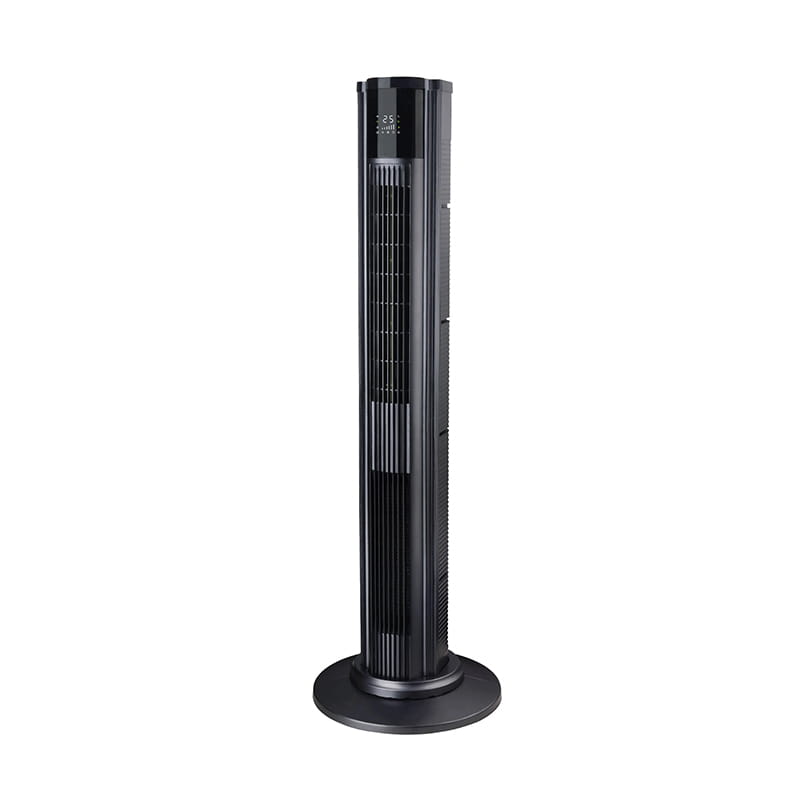 Heating and Cooling 2-in-1 Tower FanA 2200W PTC tower unit with heating and fan modes, oscillation, timer and remote, suited to retailers seeking one appliance for both seasons.View Product →
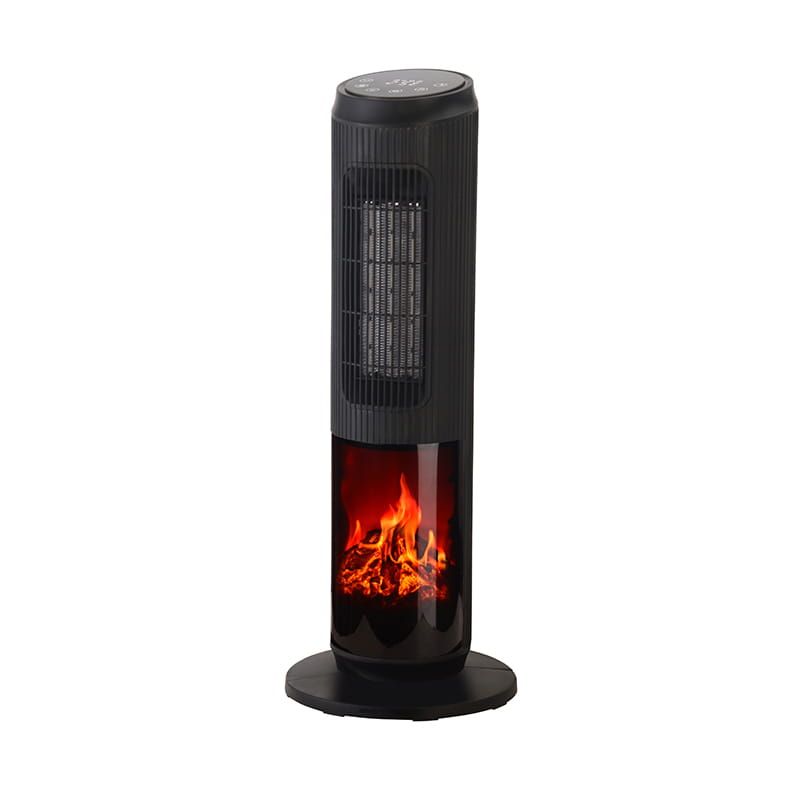
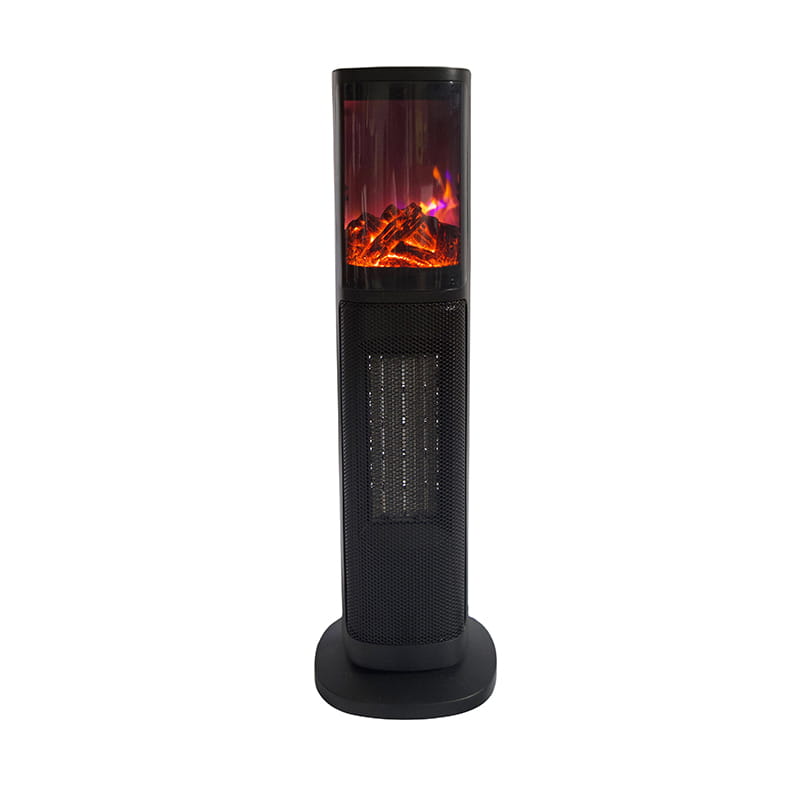
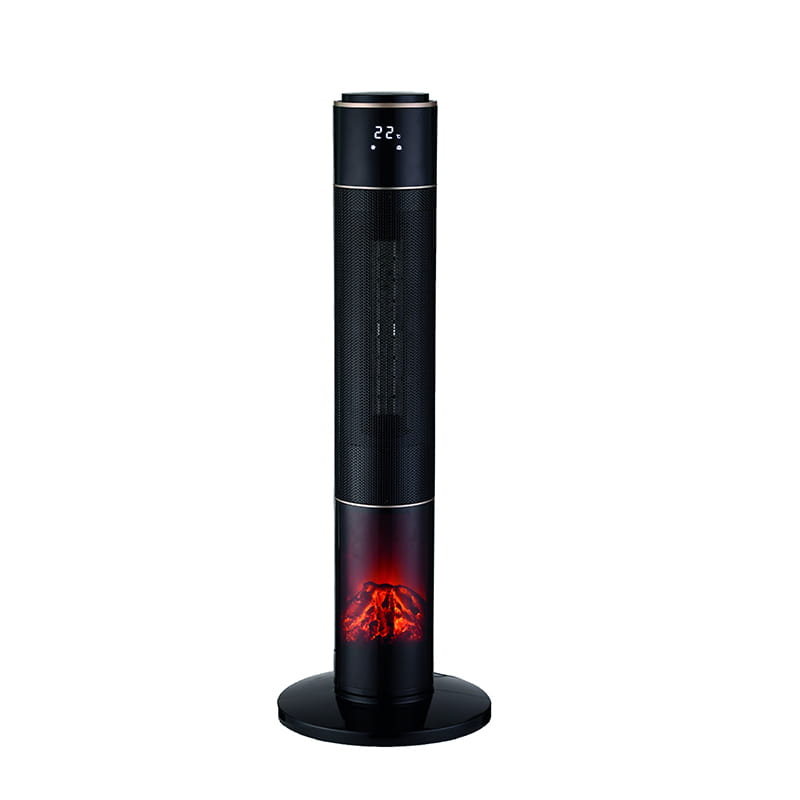
Flame effect towers pair a PTC element with LED lighting and a rotating reflector, producing a simulated flame with no combustion, no fuel and no smoke. For buyers, the appeal is margin: the product competes with decorative fireplaces rather than with basic fan heaters. The engineering caution is optical — reflector alignment and LED colour consistency have to be controlled in production, or units look patchy on a retail shelf.
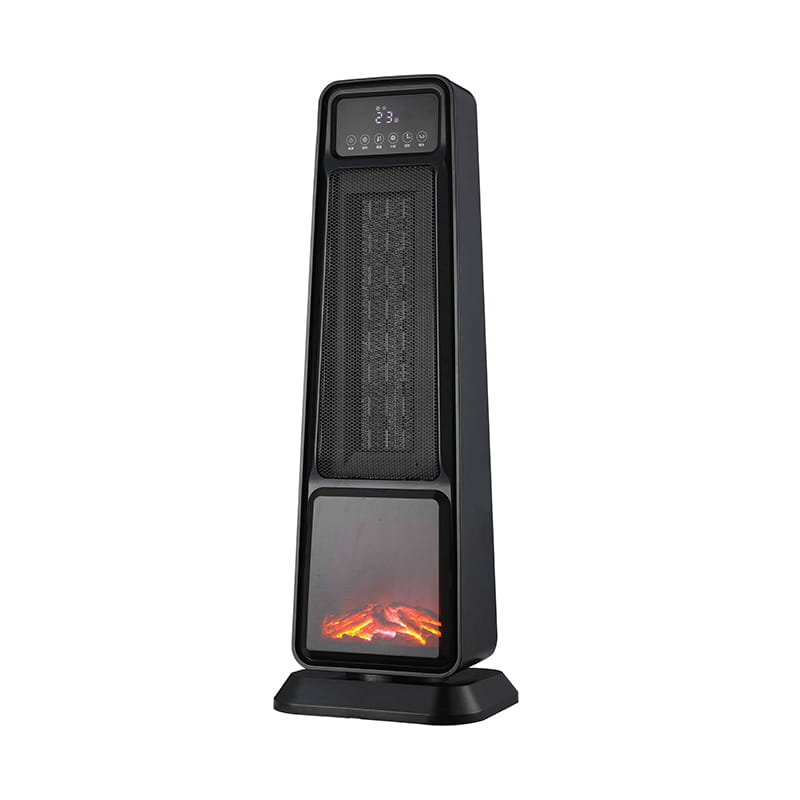 Digital Fireplace Electric Tower Heater with Flame EffectA 2200W PTC tower heater with simulated flame, two heat settings, oscillation, timer and remote, positioned for buyers comparing decorative fireplace alternatives.View Product →
Inside the Unit: Components That Decide Reliability
Illustrative diagram: component layout in a typical digital PTC tower heater. Internal arrangement varies by model.
Most warranty claims on tower heaters trace back to a small group of parts rather than to the element itself. Ask for the failure data behind each of these items before you approve a sample:
- Blower balance and bearing type — sleeve bearings are quieter when new but degrade faster than ball bearings in continuous use
- Housing resin grade, wall thickness and flame-retardant classification on the internal element support
- Thermal cut-out and thermal fuse ratings, plus the reset behaviour after an overheat event
- Tip-over switch sensitivity, tested with the unit at the angles it will meet on uneven floors and thick carpets
- Cord gauge, strain relief pull test results and plug temperature rise under full load
Safety and Compliance Checks Before You Commit
Room heaters are among the more heavily regulated small appliances. In Europe, the reference standards are IEC 60335-1 with EN 60335-2-30 for room heaters; a GS certificate requires testing by an accredited body and a factory inspection. In the United States and Canada, UL 1278 governs movable and wall-mounted electric room heaters. Certificates that are not linked to a specific model number and production site are of little value when a customs officer or a retail compliance team asks questions.
The clauses that most often catch a first design are less glamorous than the headline safety features. Inclined-plane stability, abnormal operation with the inlet blocked, glow-wire and needle-flame testing on non-metallic parts, and cord anchorage after repeated flexing all fail regularly on pre-production samples. Reviewing those results early is cheaper than re-tooling a grille later. Our own technical note on tower ceramic fan heater safety covers the user-facing side of the same topic.
OEM and ODM Sourcing: From Spec Sheet to Shipment
Ningbo Shuaige Electric Appliance Co., Ltd. manufactures PTC fan heaters in its own factory in Ningbo, with a self-reported floor area of about 20,000 m², and supplies private-label programs on an OEM and ODM basis. Programs typically begin with a specification document rather than a catalogue number, because small changes to voltage, plug type, control board or flame module shift tooling and certification scope.
- Send the destination market, voltage and plug standard, target wattage, control type and required certifications
- Confirm whether the platform is a stock model, a modified stock model, or a new ODM design that needs tooling
- Agree the sample configuration and test it against your own drop, noise and thermal checks
- Lock the packaging artwork, manual language and rating label before mass production
- Confirm production lead time against quantity — 30 to 60 working days is common for PTC heater programs and depends on component lead times
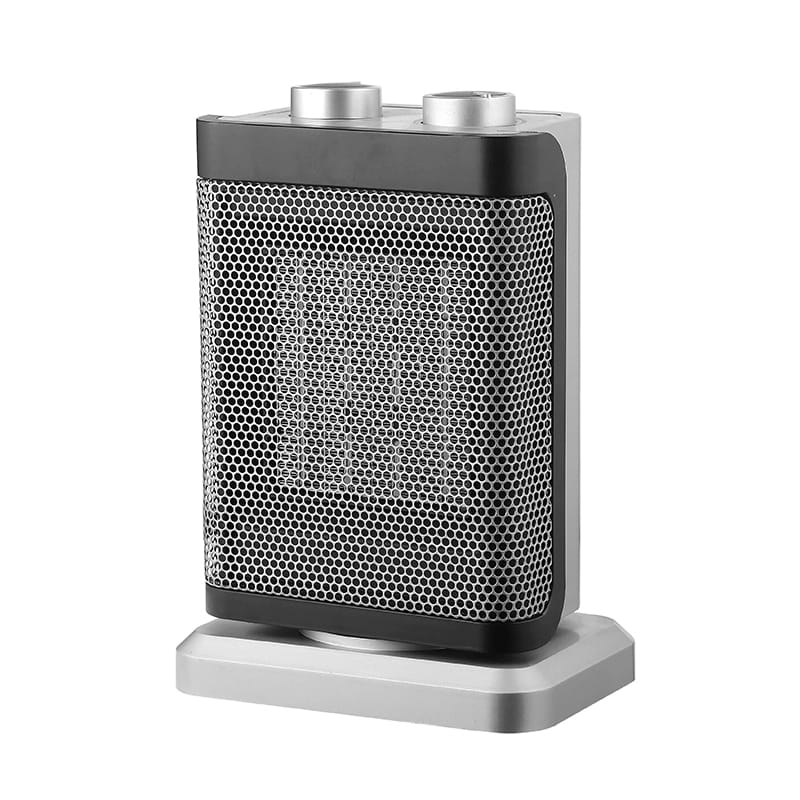
The full range of tower ceramic fan heaters shows how the same platform scales across wattages and feature sets, which is useful when you want several SKUs from one tooling investment. If you are comparing suppliers for a digital tower heater program, send the specification and target volume to our team and we will come back with the configuration options, tooling position and a quotation based on your actual requirements.
Frequently Asked Questions
What is the difference between a digital and a mechanical tower heater?
A mechanical model uses a knob-driven thermostat with a wide switching band. A digital model uses an NTC thermistor and a microcontroller, so it holds a numeric setpoint more closely and adds timers, remote control and memory functions.
How many watts do I need for a bedroom or living room?
As a planning check, 60 to 100 W per square metre suits a reasonably insulated room in a temperate climate. A small bedroom usually works with 1500 W, a living room with 1800 to 2200 W. Always confirm against the destination's wiring.
Is it safe to leave a digital tower heater running overnight?
Units with a tip-over switch, thermal cut-out and auto-off timer are designed for extended use, but the manual's instructions still apply. Keep the unit clear of curtains and bedding and never cover the outlet grille.
Do ceramic tower heaters use a lot of electricity?
A 1500 W heater draws 1.5 kWh per hour at full output. Consumption depends on how far the room is from the setpoint, not on whether the control is digital, and PTC elements reduce output automatically as they warm up.
Can I order a digital tower heater with my own brand and voltage?
Yes. Voltage, plug type, display language, remote functions, housing colour and packaging can be customised under OEM or ODM arrangements. MOQ, tooling cost and lead time are confirmed per project.
How should a digital tower heater be cleaned and maintained?
Unplug the unit, vacuum the inlet grille and any filter screen, and wipe the housing with a dry or slightly damp cloth. Never let water reach the element or control board, and check the cord and plug for heat marks each season.

-
Feedback
Related products



Copyright© Ningbo Shuaige Electric Appliance Co., Ltd. All Rights Reserved
